


What if a table feels more complete when you take something away? If you’re wondering how to create a minimalist tablescape without making it feel bare, start with one focal point and edit everything else around it. A pared-back setting can still feel warm and personal. Balance open space with inviting color and texture, using pieces you already own.
You don’t need a matching set or a stack of decorative extras to welcome guests. A simple vase, a textured runner, or distinctive glassware can bring enough character when each piece has a purpose. Build your table by choosing a focal point, layering a restrained palette, and leaving room for the meal and conversation. The steps below will help you balance the setting, adapt it for different gatherings, and choose linens, placemats, flatware, and serving pieces with care.
Key Takeaways
- Learn how to create a minimalist tablescape with a simple, repeatable process using pieces you already own.
- Choose a neutral foundation and a restrained accent, then repeat a color or finish to bring varied pieces together.
- Decide whether a bare table, placemats, or a runner best suits your setting and the space you need for dining.
- Build place settings in useful layers, keeping only pieces that add function, texture, or visual structure.
- Finish with one personal detail that suits the meal and makes the table feel welcoming, not crowded.
What Makes a Minimalist Tablescape Feel Complete, Not Bare?
If you’re deciding how to create a minimalist tablescape, think of editing rather than emptying. A deliberately pared-back setting gives every piece a purpose, balances visual weight across the table, and leaves enough room for serving and conversation. The result can feel calm without looking cold, because simplicity still makes room for color, texture, and personal touches.
A minimalist tablescape is a thoughtfully edited table setting where useful pieces, tactile details, and open space work together to create a welcoming mood. That definition leaves room for a cherished vase or an unusual glass. Minimalism doesn’t mean every surface must be bare; it means making considered choices. For a helpful foundation in place settings and dining arrangements, explore this overview of the history and practices of table setting.
The difference between simple and unfinished
A simple table feels intentional because the eye has somewhere to land and each guest has what they need. A single vase can serve as a focal point, while consistent place settings establish a clear rhythm around it. By contrast, a few scattered items with no visual relationship can look forgotten rather than edited.
Breathing room is deliberate space around objects, not an accidental gap where something seems missing. Keep a piece if it serves the meal or strengthens the mood you want. A runner might add a soft line through the center; a placemat can define each place. If an item does neither, remove it temporarily and see whether the arrangement feels clearer.
Choose a mood before choosing table pieces
Start with one feeling: relaxed, airy, or quietly elegant. Let that mood guide a simple palette and the level of formality. A relaxed meal might suit easygoing linens and everyday glassware; a more formal dinner can feel polished through orderly place settings and refined flatware. You don’t need extra decoration to signal the occasion.
Look at what you already own before choosing anything new. Pieces don’t have to match to belong together. Repeat one color, shape, or finish, and let the other elements stay understated. For example, different glassware can feel cohesive alongside linens in a related tone. This small point of connection gives the table a sense of intention while preserving each piece’s character.
Proportion matters, too. A tall centerpiece can overwhelm a small table, while a low, modest accent can keep sightlines open and the setting comfortable. Consider the meal, the space each guest needs, and the mood you’ve chosen. When the focal point, place settings, and open areas feel balanced, the table looks complete without feeling crowded.
Choose a Restrained Palette and One Tablescape Focal Point
Once you have a mood in mind, use color and a single focal point to give the table a clear visual direction. Start with what’s already there: the wood grain, stone, or other finish of the tabletop can act as your foundation. If you’d rather soften or simplify it, use a neutral linen or runner as the base. Then choose one restrained accent, such as a muted green napkin or a warm-toned glass, and repeat it in a few places.
Repetition creates cohesion without requiring a matching set. A color echoed in napkins and glassware, or a finish repeated in flatware and a vase, helps different pieces feel connected. Keep the rest of the palette quiet so the accent feels intentional rather than competitive.
Rule of thumb: Let one accent color and one focal element lead; keep everything else calm enough to support them.
Build a calm color palette
Choose a neutral foundation, then add an accent through a napkin, placemat, or glassware you already own. For example, pale linens can make a deep green goblet stand out without introducing a second strong color. If one solid tone feels flat, bring in tonal variation: pair warm ivory with sand, or soft gray with charcoal. Small shifts in shade add depth while keeping the overall look settled.
Make one centerpiece do the visual work
Choose one object to draw the eye, such as a vase, a modest floral arrangement, or a sculptural container. Keep its height and visual weight in proportion to the table, so it feels present without dominating the place settings or blocking conversation. A low arrangement can create a focal point while keeping sightlines open. The aim isn’t to fill the center, but to give the eye one clear place to pause.
Before settling on a centerpiece, set out the dishes and glassware needed for the meal. Leave room for serving pieces and enough open surface for guests to eat comfortably. If the table is narrow, a small vase may work better than a wide arrangement; on a longer table, a runner can guide the eye toward a modest central accent. Remove anything that competes with the focal point.
Think of the palette and centerpiece as a pair: the colors establish the atmosphere, while the focal object gives it shape. If the centerpiece is colorful or sculptural, keep nearby pieces understated. If it’s simple, a repeated accent in napkins or glassware can provide quiet interest. Choose only what helps the arrangement feel balanced, and use table linens and vases to add color or texture without crowding the setting.
Layer Linens, Place Settings, and Glassware Without Adding Clutter
Each layer should earn its place. A linen can soften a surface, a placemat can define a guest’s setting, and glassware can add a glint or a subtle change in shape. If two pieces do the same job, keep the one that better suits the mood. This test helps you create a minimalist tablescape that feels finished and still leaves room for the meal.
Decide whether the table needs a linen layer
Let the tabletop show if its color and texture already support your look. Visible wood grain, for instance, can bring natural warmth without adding another material. If the surface feels visually busy or too hard, introduce one soft layer. Placemats create clear, individual zones; a runner draws the eye along the table and adds a gentle line through the center.
Use both only when they have distinct roles. A runner can anchor the overall arrangement while placemats define each place setting, but stacking them just to add more fabric may make the table feel crowded. A folded napkin or napkin ring can add a small tactile accent without requiring another full layer. For ideas on coordinating these details, explore the guide to table linens and napkin rings.
Keep place settings clean and functional
Set the table for the meal you’re serving, not for an imagined formal occasion. Include the dishes, flatware, and glassware guests will use, then leave out anything unnecessary. A simple arrangement can still feel considered: align each setting consistently, fold napkins neatly, and use one repeated shape or finish to connect pieces that don’t match exactly.
Glassware can contribute lightness without competing with the centerpiece. Choose the glasses needed for the meal, and let their silhouettes or finish echo another detail rather than introducing a new visual statement. Uncomplicated flatware brings a clean outline to the place setting. The aim isn’t to hide useful objects, but to give them enough space to feel intentional.
Before guests arrive, check the table from each seat. Make sure place settings feel comfortable, glasses are within easy reach, and shared serving pieces have room to land. If a runner or decorative accent crowds that working space, remove or reposition it. A well-edited table balances the softer texture of linens with the practical clarity of dishes, flatware, and glassware.
Use this quick edit to decide what stays:
- Keep a layer that protects, defines, softens, or adds useful texture.
- Adjust pieces that crowd a place setting or obstruct shared serving space.
- Remove duplicates that add no function or visual distinction.
The finished setting should feel comfortable to use as well as pleasing to look at. When every layer has a clear role, even a mix of existing linens, placemats, flatware, and glassware can read as one coherent arrangement.
How to Create a Minimalist Tablescape Step by Step
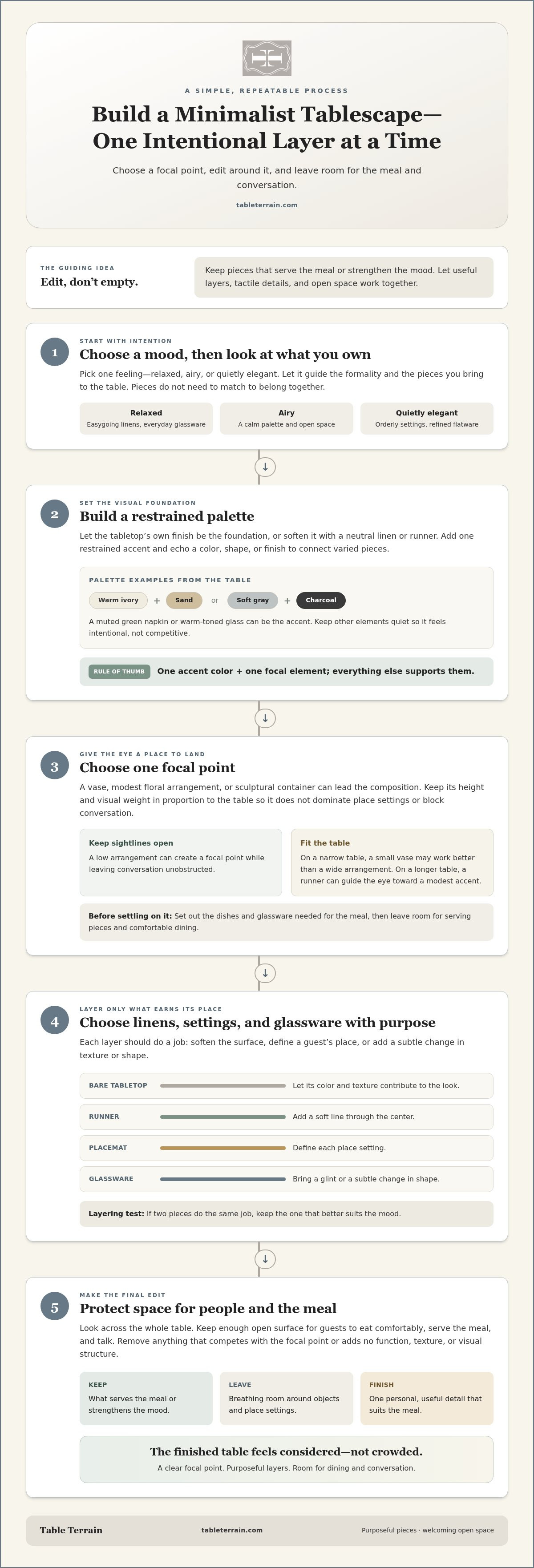
Use this sequence to style a welcoming table without buying a matching set or adding layers just for decoration. Work with what you have, and pause after each step to check that the arrangement suits the meal and the available space.
- Clear the table. Remove everyday items, then look at the surface in natural light. Notice its color, grain, and shape. Decide whether it can serve as the visual foundation or needs a linen layer to soften or define it.
- Choose one base layer, if needed. Lay out a runner or placemats, not both by default. A runner can draw the eye along a long table; placemats can mark individual settings. Leave the table bare if its finish already adds warmth and character.
- Set each place for the meal. Arrange only the dishes, flatware, and glasses guests will use. Start with one setting, then use it as a guide for spacing the others. Keep the arrangement consistent, but don’t crowd the edge or leave shared serving pieces with nowhere to go.
- Add one focal point. Place a vase, a modest arrangement, or another meaningful object where it anchors the table without taking over. Check its height from a seated position. Guests should be able to see one another and comfortably reach across the table.
- Repeat one detail. Echo a color, texture, shape, or finish in a few small places. A napkin tone that picks up a detail in the glassware can connect varied pieces. Keep the repetition subtle, so the focal point stays clear.
- Edit and test the setting. Remove anything that duplicates a function or pulls attention away from the main arrangement. Sit in different seats, check sightlines, and make sure there’s room for shared dishes. Adjust spacing to suit the table’s shape and the number of guests.
That order makes how to create a minimalist tablescape a practical exercise in arranging and editing, not a hunt for extra décor. If one side feels heavier, shift the focal point or simplify nearby details. If a place setting feels tight, remove a layer or move serving pieces elsewhere. The table should look balanced from across the room and feel easy to use from every seat.
Ready to add a useful finishing touch? Explore table linens, placemats, and runners to find a layer that supports the look you’ve built.
Finish Your Minimalist Tablescape With One Personal, Useful Detail
A simple table becomes memorable through a detail that feels connected to the people gathering around it. Choose one piece that adds personality and has a reason to be there: a vase you love, distinctive glassware, a textured napkin ring, or a serving piece that will be used during the meal. The best finishing touch doesn’t need to be new. Something already in your home can make the setting feel considered rather than generic.
Choose a finishing detail with a purpose
Let the detail contribute something specific. A vase can hold a small seasonal branch, a napkin ring can bring a tactile accent, and a serving piece can make a shared dish easy to pass. You might also choose an item for its color, material, or personal meaning. Keep it in step with the palette and focal point you’ve established, so it feels like part of the composition rather than an extra idea competing for attention.
Before adding it, consider what the meal requires. If the centerpiece already occupies the most useful spot, a smaller detail at each place may work better. If guests need space for shared dishes, choose something that can be moved or used as serving begins. Function and beauty can sit side by side, as long as the finishing choice doesn’t make the table harder to use.
Adapt the finished look to the occasion
For everyday meals, keep the final layer easy to clear and comfortable to live with. A neatly folded napkin or favorite glass may be all the table needs. For a special dinner, add one considered touch, such as a textured runner or a distinctive serving piece, rather than introducing several decorations that compete for space.
Use the same test each time: does this detail support the mood, help the meal, or carry personal meaning? If it does none of these, leave it off. That edit is part of how to create a minimalist tablescape that feels warm and individual, not merely sparse. It also makes the look adaptable: one thoughtful detail can change with the season or gathering while the rest of the table stays familiar.
If linens or napkin rings would add just the right texture, explore curated table linens and napkin rings for layering ideas. Choose only the piece that suits your table. A complete matching set isn’t necessary; one well-chosen item can bring function, texture, or a personal note to the setting you already have.
Let Your Table Grow With Every Gathering
Your table doesn’t need a final, fixed look. Let it change with the meal, the season, or a small detail that feels meaningful to you. Each time you host, notice what guests use and what simply takes up space. That observation gives you an easy starting point for the next setting, without turning hosting into a search for more things.
Once you know how to create a minimalist tablescape, you can make it your own through small, thoughtful choices. Keep a familiar foundation, then swap one useful accent when you want a fresh mood. A setting built this way can feel personal and ready for guests without requiring a complete matching set.
For a considered finishing touch, explore tabletop pieces to bring your minimalist setting together. Table Terrain offers curated tabletop décor and dining accessories, including linens, glassware, flatware, serving pieces, vases, and placemats, so you can choose individual pieces for your table. Explore the collection and choose the detail that makes your next gathering feel like your own.
Frequently Asked Questions
Can a minimalist tablescape include color?
Yes, color can make a minimalist table feel lively without making it busy. Try a restrained accent in one area, such as colored glassware against neutral dishes or a colored napkin against a bare wood table. If a patterned piece is meaningful to you, let it lead and keep nearby items simpler. The goal isn’t to avoid color, but to give it room to stand out.
How do you make a minimalist tablescape feel warm?
Use details that bring softness and familiarity to the table. A woven placemat, a fabric napkin, or a vase with a few seasonal stems can add tactile interest without filling every open space. Warmth can also come from mixing familiar dishes with one special piece that has a story behind it. For a cozy evening meal, soft candlelight nearby can complement the setting without adding more tabletop clutter.
Do you need a tablecloth for a minimalist tablescape?
No, a tablecloth is optional. If you like the tabletop’s finish, leave it visible and use individual placemats only where you want to define a place. A cloth can be helpful for a special meal or when you want a softer backdrop, but it shouldn’t feel like a required layer. Consider how easy the table will be to use and clear after the meal before choosing a full-covering linen.
How many centerpiece items should a minimalist table have?
Start with one main centerpiece, then add another item only if it has a clear role and the table has room. For example, a vase can provide visual interest while a nearby serving dish is there for the meal, not decoration. Keep the centerpiece low enough to preserve conversation across the table. On a small table, a single compact object may be all the visual emphasis you need.
Can you create a minimalist tablescape with dishes you already own?
Absolutely. A cohesive table doesn’t depend on identical dishes. Gather what you have, then look for a detail that connects the pieces, such as a shared color, similar shape, or consistent finish. If your plates vary, use simple flatware and glassware to keep the overall setting visually calm. This is a practical way to create a personal tablescape without replacing useful pieces.
Is a minimalist tablescape suitable for a dinner party?
Yes, a minimalist tablescape can suit a dinner party because it leaves space for guests, food, and conversation. Set each place with the dishes and utensils needed for the menu, and make sure shared serving items have a convenient place to go. For a more celebratory feel, introduce a seasonal detail or a favorite glass, while keeping the arrangement comfortable to use throughout the meal.
What should you remove when editing a minimalist tablescape?
Remove items that repeat a job, crowd the place settings, or compete with the detail you want guests to notice. For example, if a runner and placemats both feel visually prominent, try taking one away and reassessing the table. Also clear anything guests won’t use during the meal. A quick test: sit down, reach for a glass, and imagine passing a dish. If something gets in the way, edit it out.