


The toast is underway when red wine splashes across the linen. Your first instinct may be to scrub, but rubbing can spread the wine and work it further into the weave. Knowing how to remove red wine stains from linen starts with one simple move: gently blot the spill while it’s fresh.
It’s stressful to treat a stain with guests still gathered around the table, especially when you’re unsure which products are suitable for the fabric. Linen can be durable, but rubbing, heat, or an unsuitable cleaner may leave the mark harder to remove or change the fabric’s color. Check the care label before choosing what to do next.
This step-by-step guide covers what to do right away, how to choose a treatment based on the linen’s color and care instructions, and what to try if a mark remains. You’ll also learn when to stop home treatment rather than risk setting the stain or harming the fabric. A calm, careful approach can help protect your linen and get you back to enjoying the gathering.
Key Takeaways
- Learn how to remove red wine stains from linen with a careful, step-by-step approach guided by the item’s care label.
- Choose a treatment based on whether the stain is fresh or dried and whether the linen is light-colored, colored, washable, or care-restricted.
- Test a cleaning solution on an inconspicuous area and follow its directions to reduce the risk of discoloration or fabric damage.
- For an older or lingering stain, reassess before trying another treatment, then inspect the linen before drying.
- Use a simple care checklist to make sure the linen is fully dry before storage and ready for the next gathering.
Red Wine on Linen? What to Do Before the Stain Sets
A red wine spill on linen is stressful, especially while the table is still set. Quick, careful action can help limit how far the wine spreads, but the right response depends on the fabric, its color, and how long the stain has been there. Lift away any solid pieces of food with a spoon or the edge of a dull utensil. Then blot the liquid rather than rubbing it into the weave.
If the spill is on a tablecloth, gently separate the stained area from clean folds or other fabric. When practical, place a clean absorbent cloth beneath the affected section to catch wine that passes through. Before applying water or a stain treatment, read the care label. This quick check helps you avoid a method that could harm the linen or its color.
What should you do immediately after red wine spills on linen?
Use a clean, absorbent cloth and work from the stain’s outer edge toward its center. This helps limit the spread of the wine. Apply light pressure, lift the cloth, and switch to a clean section as it absorbs liquid. Keep the damp, stained area from resting against another part of the tablecloth or a clean surface.
- Lift, don’t scrape. Remove solids gently without dragging them across the fabric.
- Blot in small passes. Press and lift instead of wiping back and forth.
- Contain the spill. Separate the stained layer from clean fabric, using a clean towel underneath if practical.
These first actions are a measured start to how to remove red wine stains from linen. They don’t guarantee complete removal, but they can help keep the spill from spreading while you check what the fabric’s care instructions allow.
Which first reactions can make a linen stain worse?
Rubbing or scrubbing may push wine further into the weave and spread the mark beyond its original edges. Heat can also make a stain harder to remove, so don’t use hot water, an iron, or a dryer before checking the care label and inspecting the treated area. Avoid reaching for several household remedies at once. A combination may be unsuitable for the linen or its dye.
- Don’t scrub. Keep contact gentle and localized.
- Don’t apply heat. Wait until you’ve treated and checked the stain.
- Don’t layer cleaners. Read the fabric label and product directions before choosing a treatment.
Stain removal techniques often involve dissolving the stain with a suitable solvent. The right approach depends on the fabric and the stain, so a general technique isn’t automatically suitable for every linen item. Blot, check, then treat: that’s a sensible first response.
How to Remove a Fresh Red Wine Stain from Linen Step by Step
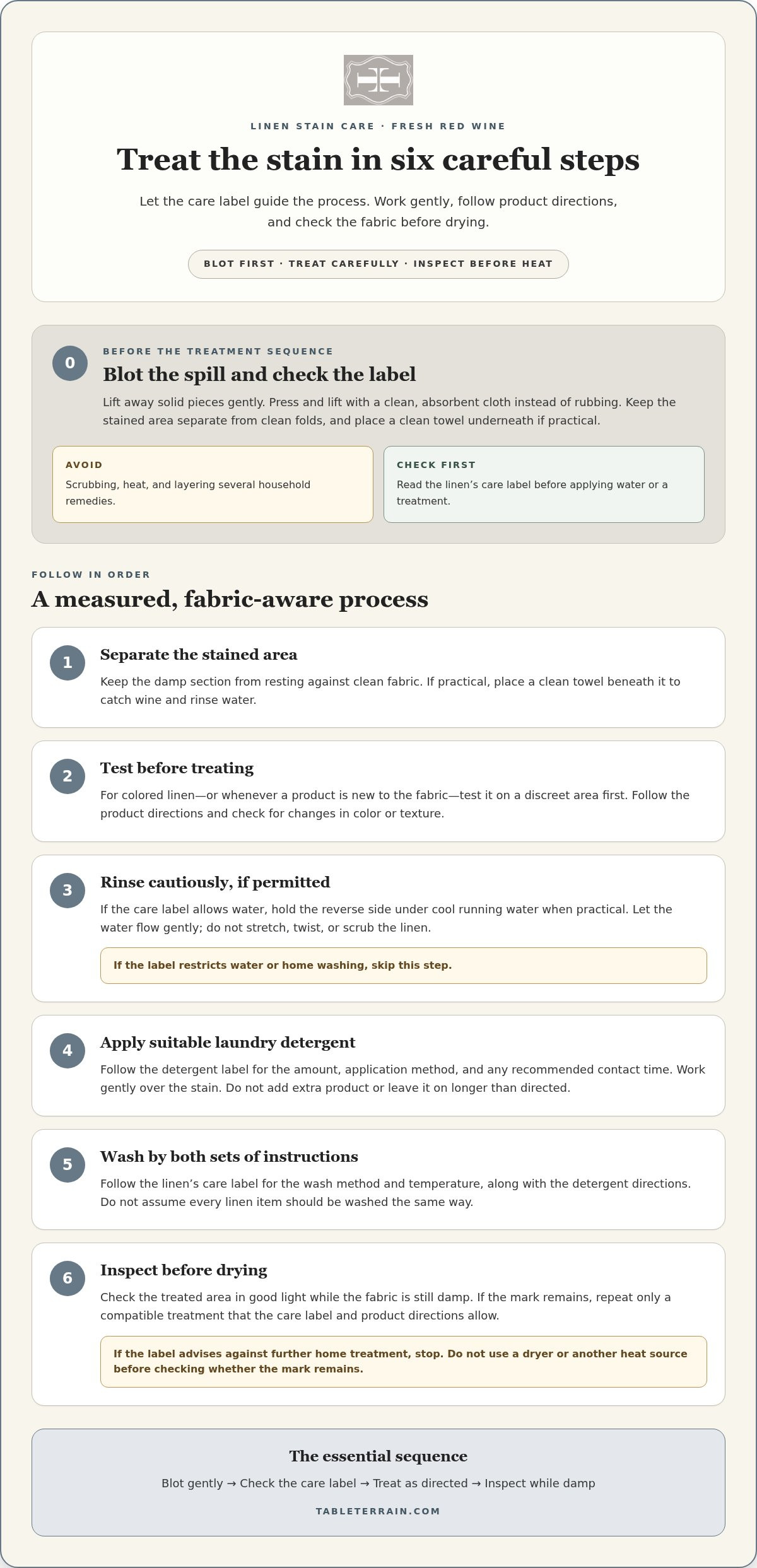
Once you’ve dealt with the spill, let the linen’s care label guide each step. The safest way to approach how to remove red wine stains from linen is to use a measured sequence rather than several treatments at once. Check whether the item can be washed at home and note any restrictions before proceeding.
- Separate the stained area. If you’re treating a tablecloth, keep the damp section from resting against clean fabric. Place a clean towel beneath it if practical, so wine and rinse water don’t transfer to another layer.
- Test before treating. For colored linen, or whenever a product is new to the fabric, test it on a discreet area first. Follow the product directions and check for a change in color or texture before applying it to the visible stain.
- Rinse cautiously, if permitted. If the care label allows water, hold the reverse side of the stained area under cool running water when practical. This can help move some residue out through the fabric instead of pushing it farther into the weave. If the label restricts water or home washing, skip this step.
- Apply laundry detergent as directed. Use a detergent suitable for the item and follow its label for the amount, application method, and any recommended contact time. Work gently over the stained area. Don’t add extra product or leave it on longer than directed in hopes of speeding up the result.
- Wash according to both sets of instructions. Follow the linen’s care label for the wash method and temperature, along with the detergent directions. Don’t assume that every linen item should be washed the same way.
- Inspect before drying. Check the treated area in good light while the fabric is still damp. If the mark remains, repeat only a treatment that’s compatible with the care label and product directions. If the label advises against further home treatment, stop rather than risk damage.
Rinse and pretreat with care
Rinsing from the reverse side is an option, not a rule for every linen item. Don’t stretch, twist, or scrub the fabric as water passes through it. When the label permits rinsing, let cool water flow gently over the back of the stain, then use a suitable detergent. Follow product instructions for the amount and contact time, especially on colored fabric.
Wash, inspect, and decide whether to repeat
After washing, look closely at the mark before using a dryer or another heat source. Don’t use heat until you’ve checked whether the mark remains. If wine is still visible, heat may make further removal more difficult. Treat again only if the fabric’s care directions and the detergent label allow it.
Careful cleaning helps preserve the linens you bring to the table. If you’re refreshing your setting, explore table linens for dining and entertaining.
Choose a Linen Stain Treatment That Fits the Fabric
There isn’t one treatment that’s right for every linen item. A fresh spill on washable, undyed linen presents different considerations from a dried mark on colored fabric or a tablecloth with restricted-care instructions. Before choosing a product or household remedy, check the care label for washing limits and guidance related to the fabric’s finish. The label takes priority over general stain advice.
Use the stain’s age, the fabric’s color, and its care requirements to narrow your next step. These are cautious starting points, not promises of identical results:
Fresh stain, washable linen: Consider a label-compatible pretreatment, then wash as directed. Avoid scrubbing or using heat before inspecting the mark.
Dried stain, washable linen: Check whether the label permits damp treatment, then test a suitable product before use. A stronger remedy isn’t automatically safer or more effective.
Light-colored linen: Test the treatment discreetly and follow both sets of directions. Don’t assume bleach or concentrated cleaners are safe.
Colored linen: Test first and watch for dye transfer or a color change. Stop if the fabric’s appearance shifts.
Restricted-care linen: Follow the label’s limits and avoid water or washing if the instructions prohibit them.
This helps answer a common concern about how to remove red wine stains from linen: the method has to fit the specific cloth, not just the type of stain. Fabric color, finish, and washing restrictions can all affect what’s appropriate.
Does treatment differ for white and colored linen?
It can. Colored linen may lose dye or change appearance when exposed to an unsuitable treatment, and a finish on light linen may also affect how it responds. Test any product on an inconspicuous area and follow its directions alongside the fabric label. If color transfers or the fabric changes during the test, stop. Don’t assume a strong cleaning agent is safe just because the linen looks white.
Should you use a household remedy or laundry product?
Judge a remedy by whether it’s compatible with the linen and its care instructions, not by how often it’s recommended. Salt, club soda, vinegar, and other household options aren’t guaranteed fixes, and a popular tip may not suit a particular dye or finish. Laundry products also need a label check and a discreet test, especially on colored cloth. Don’t layer different treatments without checking that they’re compatible.
A commonly repeated remedy isn’t the same as a treatment verified as safe for your specific fabric. If the label rules out your preferred option, choose another compatible approach or stop rather than experiment. An unsuccessful test or color change can leave more than the original wine mark to address.
What to Do if the Red Wine Stain Is Old or Still Visible
An older red wine stain may take more care than a fresh spill, and a mark exposed to heat can be harder to remove. That doesn’t mean every attempt is futile, but no household treatment can promise complete removal. The linen’s care label, color, finish, and the stain’s history all affect what’s sensible to try next.
Before repeating a treatment, pause and reassess. A careful sequence helps prevent the stain from becoming a fabric problem too:
- Recheck the care label. Confirm whether the item can be dampened, pretreated, and washed at home. Follow any restrictions.
- Test a suitable treatment. Apply it to an inconspicuous area first, following its directions. Check for color transfer or changes in texture or appearance.
- Treat only if the test is clear. If the label permits, rehydrate a dried mark with cool water or use a compatible laundry product as directed. Don’t combine cleaners or extend their contact time.
- Inspect before drying. Look at the area in good light after treatment. If the mark remains, don’t expose the linen to a dryer, iron, or other heat while deciding what to do.
This measured approach is central to how to remove red wine stains from linen without trading one problem for another. Repeated scrubbing or layering products can stress the fibers, affect color, or make it harder to tell how the fabric is responding.
Can you treat a red wine stain after it has dried?
It may still be possible to treat a dried stain, but the result depends on the linen and what has happened to the mark since the spill. If the care label allows water, gentle rehydration may prepare the area for a compatible pretreatment. Follow the product directions, test first, and don’t assume a familiar household method will completely remove an old stain.
If the mark remains after a careful, label-compatible attempt, stop and reassess rather than applying a stronger product by guesswork. A stain that has already been through a hot wash or dryer calls for a more cautious decision, not more force.
When should you stop treating linen at home?
Stop if dye transfers during a test, the fabric’s texture changes, or the care label restricts home washing or treatment. Delicate, valuable, or visibly damaged linen may be safer with a professional textile cleaner than with further experimentation. Until you decide on the next step, keep the stained area away from heat and avoid storing the item damp.
If a persistent mark has you reconsidering the table setting, browse table linens for your next gathering.
After Cleaning Linen: Dry, Check, and Set the Table with Confidence
Before putting cleaned linen away or returning it to the table, take a moment to check the fabric. A stain that’s still visible can be harder to address after heat, while damp linen tucked into storage can develop an unwanted musty smell. This final check completes how to remove red wine stains from linen carefully, without assuming every piece can be dried or stored the same way.
How can you check linen before putting it away?
Inspect both the front and reverse of the fabric in clear light. A faint mark may be easier to spot from one side than the other. If you can still see it, hold off on heat-based drying and refer to the care label before deciding whether another compatible treatment is appropriate.
- Look closely. Check the original spot and the surrounding area for any remaining discoloration.
- Follow the care label. Use its drying instructions rather than assuming all linen responds alike.
- Store only when fully dry. Let the fabric dry as directed, then put it away only when it’s completely dry.
If the mark remains, don’t use an iron or dryer while you consider your next step. If it’s gone, the care label still matters: different linen items may have different drying and storage needs.
How can thoughtful table linens support easier hosting?
Keep napkins within reach during meals and gatherings. They’re a practical part of the table, and having them nearby makes it easier to address a small spill promptly. Choose napkins that suit your table and care preferences, and follow their individual care instructions after use. No linen can be assumed to prevent stains, so readiness and timely attention are more useful than relying on a special finish.
For ideas beyond stain care, explore the table linens and napkin rings guide and find inspiration in elegant table settings for dinner parties. A considered combination of linens and napkin rings can bring a polished look to the table while keeping the setting welcoming and comfortable for guests.
Before your next gathering, use this simple checklist: inspect the fabric on both sides, confirm the mark is gone before applying heat, follow the care label for drying, and store the linen only when fully dry. Keep napkins handy and tend to spills as they happen. These small habits make table care more manageable, so you can focus on sharing a meal.
Explore Table Terrain’s table linens to refresh your setting for the next occasion.
Make Room for the Next Gathering
A cared-for table isn’t about keeping every moment pristine. It’s about creating a welcoming place where people can linger, share stories, and enjoy the meal. Knowing how to remove red wine stains from linen can make an unexpected spill feel less daunting, but the bigger reward is bringing your favorite linens back to the table with care and confidence.
As you plan your next gathering, consider the details that make the setting feel like yours. A mix of table linens, napkin rings, placemats, and runners can bring warmth and character to dining at home. Choose pieces that suit the way you entertain, then let the occasion unfold naturally.
Explore Table Terrain’s curated table linens and find thoughtful pieces for your next shared meal. Here’s to beautiful gatherings, relaxed hosting, and more moments around the table.
Frequently Asked Questions
Does club soda remove red wine stains from linen?
Club soda may be suggested as a quick response, but it isn’t a guaranteed stain remover. First blot the spill instead of pouring more liquid over it, which could enlarge the damp area. Check the linen’s care label before choosing a cleaning product, and follow that product’s directions. If you test club soda or another method, try it on a hidden hem or seam first, especially on colored or finished fabric.
Can white wine remove a red wine stain from linen?
No, don’t rely on white wine to remove a red wine mark. Adding it introduces more liquid and may spread the spill without addressing the stain. If wine lands on a tablecloth during dinner, lift away any solids and blot with a clean cloth, keeping the stained section separate from dry folds. Then choose a treatment that fits the care label and check the result before drying.
Is salt a good way to remove red wine from linen?
Salt is a commonly repeated home remedy, not a dependable fix for every linen item. Its suitability can vary with the fabric, dye, and finish, so don’t assume it’s harmless just because it’s a pantry staple. For how to remove red wine stains from linen, start by checking the care label and select only a compatible treatment. If you try salt, test discreetly and stop if the fabric’s appearance changes.
Can I use hydrogen peroxide on a red wine stain on linen?
Don’t apply hydrogen peroxide automatically, especially to colored linen. It may affect some dyes or finishes, and the item’s care label may rule out that type of treatment. Check both the textile instructions and the product label, then test a permitted treatment on a hidden area before addressing the visible spot. If color transfers or the fabric changes in texture or appearance, stop rather than applying more.
What happens if I put stained linen in the dryer?
Dryer heat may make a remaining stain harder to remove. Before drying, check the treated area in good light, including the reverse side if accessible. If you can still see a mark, keep the item away from heat while you review the care label and suitable next steps. For delicate or restricted-care linen, avoid further home experiments and consider professional textile cleaning.
How much detergent should I use on a red wine stain?
Use the amount and application method stated on the detergent label, provided the linen’s care instructions allow that product. There isn’t one suitable quantity for every detergent or textile. Apply it only to the affected area if the directions permit, and don’t mix it with other cleaners. Rinse or wash as instructed, then inspect the fabric before drying to decide whether another label-compatible treatment is appropriate.