


Could the prettiest salad bowl on the table be the hardest one to serve from? A narrow base can wobble while you toss, and a shallow shape can send leafy greens over the edge. Choosing serving bowls for salads means balancing appearance with the way you prepare and share food. If you’re wondering what size suits your usual gatherings or how a bowl will work with the tableware you already own, start with those practical questions.
Consider your recipes and serving style first, then compare shape, material, and capacity. A roomy bowl with a stable base may work well for tossing greens, while its material affects the look and care routine. This guide will help you choose a bowl for everyday meals or larger gatherings, weigh practical trade-offs, and coordinate it with linens, placemats, and serving pieces for a considered, uncluttered table.
Key Takeaways
- Choose serving bowls for salads around how you serve, not appearance alone. A stable, accessible shape makes sharing easier.
- Match the bowl’s profile to the salad and serving style, considering how broad or deep it should be.
- Compare materials for their look, feel, and care needs before choosing a bowl for frequent use or special gatherings.
- Estimate capacity from your usual guest count, salad volume, and whether the dish is a side or the main event.
- Frame the bowl with serving utensils and a few coordinated linens or placemats for a polished, uncluttered table.
Serving Bowls for Salads: What Makes a Bowl Work Well?
A salad bowl should be comfortable to serve from and feel at home on your table. Its role is to hold a shared dish where guests can see the ingredients and serve themselves with ease. Unlike individual salad bowls, a serving bowl needs room for both the salad and the movement of serving utensils. Choose between the two based on how you like to serve, rather than treating either as essential for every table.
A useful salad serving bowl has enough depth to contain its ingredients, a stable base, and sides that make reaching in easy. That balance matters whether you’re tossing greens at the table or passing a composed salad around the meal.
When does a dedicated salad serving bowl make sense?
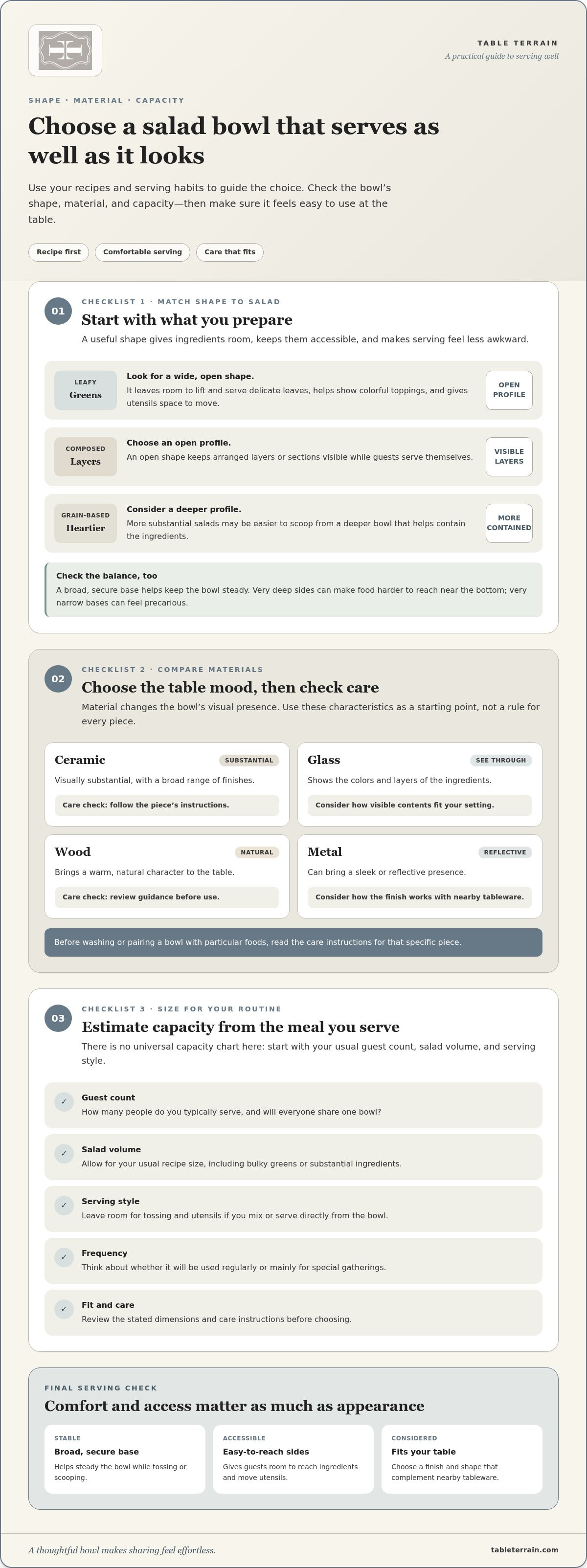
A shared bowl suits weeknight meals and family dinners when everyone serves themselves, and it can make a larger gathering feel relaxed and welcoming. Consider the salads you prepare: leafy greens need room to lift and toss, while a composed salad benefits from a shape that shows its layers. Grain-based salads tend to be denser, so look for enough room to scoop without spilling.
A dedicated salad bowl makes sense if salad regularly has a place on your table. If you prefer fewer single-purpose pieces, a versatile serving bowl can also hold salads, sides, or other shared dishes. Let your recipes and serving habits guide the choice.
What should a salad bowl do at the table?
Start with stability. A broad, secure base helps keep the bowl steady as guests scoop or you toss ingredients. A narrow base can feel precarious, while very deep sides may make ingredients harder to reach near the bottom. Look for a shape that gives utensils room to move without crowding the greens.
An open shape also helps guests see what’s inside and reach ingredients easily. That’s useful with mixed salads where colorful toppings might otherwise disappear beneath the leaves. For more background on the serving dish, explore the history of the salad bowl.
Appearance matters, but it shouldn’t be the only consideration. A bowl’s material, finish, and shape contribute to the table’s mood, from casual and natural to crisp and refined. Choose one that complements your setting and feels comfortable to use. A thoughtfully selected serving piece can sit alongside linens, placemats, and other table accents without competing with the meal.
How Bowl Shape and Material Change Salad Serving
Shape affects how easily guests can see, reach, and serve the salad. A broad, open bowl gives serving utensils room to move and makes ingredients easy to view. A deeper profile can help contain a fuller mix, but sides that are too high may make scooping less comfortable. Consider the ingredients, serving utensils, and how the bowl will be passed around.
Which bowl shape suits leafy, composed, or grain salads?
For leafy greens, a wide opening gives you room to lift and serve delicate leaves without compressing them. It also displays colorful toppings clearly. A composed salad arranged in layers or sections benefits from an open profile that keeps the presentation visible. Grain-based or substantial mixed salads may be easier to serve from a deeper bowl that helps contain the ingredients. Treat these as starting points, not rules: recipe proportions and utensil size matter too.
How should you compare serving-bowl materials?
Material shapes the table’s visual mood and how a bowl looks alongside other pieces. Ceramic can appear visually substantial, while clear glass puts layered ingredients on display. Wood brings a natural, warm look; metal can feel sleek or reflective. These are general material characteristics, not a guarantee that every bowl suits every salad or serving method. Read the care instructions for the specific piece, especially before washing it or using it with particular foods.
Use this comparison to narrow down the look you want, then weigh it against serving needs and the item’s care guidance.
| Material | Table effect | Consider |
|---|---|---|
| Ceramic | Visually substantial, with a broad range of finishes | Follow the piece’s care instructions |
| Glass | Shows colors and layered ingredients | Think about how visible contents fit your setting |
| Wood | Natural, warm character | Review care guidance before use |
| Metal | Sleek or reflective presence | Consider how its finish works with nearby tableware |
When choosing serving bowls for salads, match the shape to the recipe first, then choose a material that supports the mood you want. A light leafy salad may suit a broad, open form; a heartier mix may be easier to serve from a deeper profile. In either case, consider access and care requirements alongside the bowl’s finish and how it fits the setting.
How to Choose the Right Salad Bowl Size and Style
Start with the way you host, rather than relying on a universal capacity chart. A bowl that suits a small weeknight meal may feel undersized when salad is the main course or you’re serving a crowd. Choose one that holds the amount you make, leaves room to serve comfortably, and fits your table and storage space.
- Guest count: Think about the number of people you typically serve and whether everyone takes salad from one shared bowl.
- Salad volume: Estimate your usual recipe size, allowing for bulky greens or substantial ingredients.
- Serving style: Leave room for tossing and utensils if you mix or serve directly from the bowl.
- Frequency: Consider whether it will be used regularly or mainly brought out for special gatherings.
- Fit and care: Review the stated dimensions and care instructions before purchasing.
How much salad should the bowl hold?
Picture your usual meal. A side salad served alongside several dishes needs less capacity than a substantial main-course salad meant to stand on its own. Ingredients affect the estimate too: loose leaves take up space differently from a compact grain salad. If you toss ingredients in the serving bowl, leave extra room for leaves and toppings to move without spilling. For shared serving, consider whether a utensil can reach the bottom comfortably as the bowl empties.
Use your common recipes as a guide. A bowl that holds your usual salad with a little room to spare is often more useful than one chosen only for an occasional large gathering.
How can a bowl fit your existing tableware?
Consider scale as well as capacity. A wide bowl needs enough space among plates, flatware, and other serving pieces; a tall profile may feel prominent on a smaller table. Compare the listed dimensions with the area where it will sit, and consider where it will be stored between meals. A piece that’s easy to bring out and put away is more likely to become part of your routine.
For a cohesive setting, repeat one visual detail instead of matching everything. Echo a color from your linens, the finish of your flatware, or the texture of a placemat. This gives the salad bowl a natural place in the setting without crowding the table. For more ideas, explore Elegant Table Settings: 2026 Guide to Hosting.
Choose serving bowls for salads by balancing guest capacity, serving ease, storage, and visual fit. A versatile shape can work across different meals, while a distinctive piece can bring character to a particular setting. Either way, dimensions and care guidance help you make a considered choice.
How to Style and Care for Salad Serving Bowls
A well-placed bowl makes a shared salad easy to reach and gives the table a natural focal point. Keep the styling simple, and follow the bowl’s care guidance so it stays ready for everyday meals and special gatherings.
How do you style a salad bowl without overcrowding the table?
Give the bowl a clear spot among the shared dishes, with enough room for serving utensils and for guests to reach comfortably. Let one color or texture echo elsewhere, perhaps in a runner, placemat, or napkin ring. Glassware and linens can support the setting without competing with the salad. For more ideas on layering the table, read The Ultimate Guide to Table Linens and Napkin Rings: Elevate Your Hosting.
Use this simple sequence to set the scene:
- Choose the salad. Let its colors and ingredients guide the mood, whether fresh and light or hearty and rustic.
- Set the bowl. Place it within easy reach and leave space around it for other shared dishes.
- Add serving utensils. Set them beside the bowl or in it, as the shape allows, without blocking access.
- Coordinate accents. Echo a color or texture with linens or placemats, then keep other table details understated.
What care details should you consider before buying?
Care needs differ by material and finish, so read the maker’s instructions for the specific bowl before cleaning or storing it. Don’t assume a piece can be cleaned or handled the same way as another bowl, even if they look similar. Check the guidance for washing, drying, and storage, and consider whether those steps fit your routine.
Storage matters, too. Think about the space available in your cupboard and how often you’ll use the bowl. A striking piece may feel special on the table, but a bowl that’s practical to store and bring out can become part of regular meals. Balance appearance with the care and handling you’re comfortable maintaining.
Choose serving bowls for salads that suit your table and your routine. For complementary linens and serving accents, explore tabletop pieces for your setting.
Make Your Salad Bowl Part of a Thoughtful Table
A considered choice follows a simple order: start with what and how you serve, choose a shape that makes serving comfortable, weigh the material’s look and care needs, then consider how the bowl fits your table. This keeps style connected to real use. The best serving bowls for salads feel natural with the dishes you make and the pieces you already own.
Should you choose a statement bowl or a versatile serving piece?
A distinctive bowl can become a focal point and add personality to an expressive setting. The trade-off is that a strong color, shape, or finish may be harder to pair with different table styles or store alongside everyday pieces. A versatile serving piece is easier to use across meals and occasions, though it may make less of a visual statement.
- Statement bowl: A characterful accent for hosts who enjoy building a setting around a standout piece. Consider how often it will be used and where it will be stored.
- Versatile serving piece: A flexible choice for varied meals and table settings. Check that its look still feels special enough for the occasions you host.
Choose based on your habits, available storage, and existing tableware. A piece that complements your plates, flatware, or linens can bring the setting together without requiring a full table refresh. For broader inspiration, explore Mastering the Art of Stunning Table Scapes: A 2026 Guide to Elegant Hosting.
What is the final pre-purchase checklist?
Before deciding, picture the bowl in use, not just on display. Run through these checks:
- Review the stated dimensions and capacity information to see whether the bowl suits your usual salads and gathering size.
- Read the care instructions for the specific item and consider whether they fit your routine.
- Imagine it with the dishes you serve most often, your available table space, and the style of your existing tableware.
- Consider storage and frequency of use alongside appearance, so the bowl is practical as well as appealing.
Table Terrain brings together curated serving items and complementary tabletop pieces, including linens, placemats, runners, and flatware. Explore these categories to find accents for a welcoming, coordinated table. Explore Table Terrain’s curated tabletop pieces.
Choose a Bowl That Makes Sharing Feel Easy
The best serving bowls for salads balance everyday function with a look that suits your table. Start with the salads and gatherings you serve most, then consider a stable, accessible shape, a material whose care fits your routine, and a size that works with your table and storage space. A statement piece can add personality, while a versatile serving piece may suit more meals and settings.
Build a coordinated table with thoughtful accents rather than matching every detail. Table Terrain brings together curated serving items and flatware with complementary table linens, placemats, runners, goblets, and wine glasses, helping you create a setting that feels welcoming and personal.
Explore Table Terrain’s curated tabletop pieces for ideas for your next gathering. Choose with confidence, then enjoy serving a salad that feels right at home on your table.
Frequently Asked Questions
What size serving bowl is best for salad?
The best size depends on how many people you serve and whether salad is a side or main dish. For a family of four, a bowl around 24 to 28 cm in diameter, with a capacity of approximately 3 to 4 liters, is a useful everyday guide. For larger gatherings, consider a roomier bowl. Leave space for tossing or serving, and review the bowl’s listed dimensions and capacity before buying.
What shape is best for serving salad?
A broad, open shape works well for leafy salads because it makes ingredients visible and gives serving utensils room to move. A deeper profile can help contain a substantial mixed or grain-based salad as guests serve themselves. Aim for a stable base and sides that aren’t so high that reaching the bottom becomes awkward. The recipe, utensil size, and serving style all affect which shape feels most comfortable.
Can you use any serving bowl for salad?
Many serving bowls can hold salad, but the most practical choice is stable, roomy enough for the recipe, and easy to serve from. Make sure the shape leaves space for utensils and the material suits the intended use. A bowl that works for a compact side salad may feel too small for a large tossed salad. Follow the maker’s instructions for food use, cleaning, and handling.
Which material is best for a salad serving bowl?
There’s no single best material for every table or routine. Ceramic can feel visually substantial, glass displays colorful or layered ingredients, wood brings a warm natural look, and metal creates a distinct, often sleek effect. Compare the appearance with your tableware, then review the specific item’s care instructions. Choose a bowl that suits the salad, serving occasion, storage space, and level of upkeep you’re comfortable with.
How do you choose a salad bowl for entertaining?
Choose serving bowls for salads based on the number of guests you usually host, the salad’s volume, and how it will be served. For three or four people, an 11- to 13-inch bowl is a practical starting point; for a larger group, bowls 15 inches or wider may suit the setting. Check that it fits your table, leaves room for other shared dishes, and offers enough space for utensils.
How should you care for a salad serving bowl?
Follow the maker’s care instructions for the specific bowl, since cleaning and handling needs vary by material and finish. Review the guidance before washing, drying, or storing it, and don’t assume different bowls share the same care routine. Consider whether the recommended upkeep fits how often you plan to use the bowl. Store it where it won’t be crowded or knocked against other tableware, keeping it ready for your next meal.