


The most luxurious-looking runner isn’t always the right one for your table. Luxury table runners earn their place through thoughtful materials, considered construction, and proportions that feel balanced with the setting, not simply a polished appearance. A beautiful piece should also suit the way you host, from relaxed everyday meals to more formal gatherings.
Choosing one can be less straightforward than expected. A material name doesn’t always tell you how a runner will look or feel, and the wrong dimensions can throw off the whole table. Care matters, too: a piece that needs more attention may not suit your routine. Compare the details before deciding.
This guide explains how to assess materials and finishing, choose proportions that complement your table, and check care and everyday practicality. You’ll also learn how to coordinate a runner with linens and dining accessories you already own, so the result feels elegant, personal, and ready to use.
Key Takeaways
- Compare luxury table runners by their confirmed materials and construction details to find a finish that suits your setting.
- Measure your tabletop, then compare the runner’s dimensions with the overhang you want.
- Consider how the runner’s color and texture will work with your dinnerware, glassware, and tabletop finish.
- Check care instructions alongside visual appeal to make sure the runner fits how you plan to use it.
- Before ordering, review product photos, specifications, and current availability to confirm the details.
Why Choose a Luxury Table Runner for an Elevated Table?
A table runner adds a focused layer to a dining setting. It can draw the eye along the table, frame place settings, and connect linens and tabletop accessories in a more considered arrangement, while leaving parts of the tabletop visible. That balance is useful when you want the table’s own finish to remain part of the design.
A luxury table runner is a decorative and functional layer chosen for its materials, construction, finish, and proportions. The word “luxury” on its own doesn’t confirm quality. Look for product details that help you judge the piece, then consider whether its look and fit suit the way you’ll use it.
What makes a table runner feel luxurious?
Start with details you can assess: how the material looks and feels, whether the edges appear evenly finished, and whether the runner’s texture and visual weight suit the table. Neat hems or a woven surface may be features worth looking for, but don’t assume they’re present based on a product title or image. Check the listing for confirmed material and construction information.
Then picture the runner in its intended setting. A refined choice should feel at home alongside your dinnerware and glassware rather than competing with them. Thoughtful proportion matters as much as surface detail. A well-chosen runner can make a setting feel complete without overwhelming the tabletop.
When does a runner work better than a full tablecloth?
Choose a runner when you want a narrower layer of coverage and prefer to keep more of the tabletop visible. Its placement can define the center of the table or provide a visual path for a centerpiece. A tablecloth covers a broader area, while a runner lets the wood, stone, or other tabletop finish remain part of the composition.
Table linens have long served both practical and decorative purposes; explore the history of table linens for broader context. For help coordinating a runner with other pieces, see the table linens and napkin rings guide. Treat a runner as an individual décor piece that can complement linens, placemats, and serving accessories already in your collection.
How to Evaluate Luxury Table Runner Materials and Construction
A runner’s appearance depends on more than its label. Material affects its feel and how it looks across the table, while construction details contribute to its finished appearance. When comparing luxury table runners, weigh these qualities against your hosting habits rather than assuming a higher-end description guarantees a particular standard.
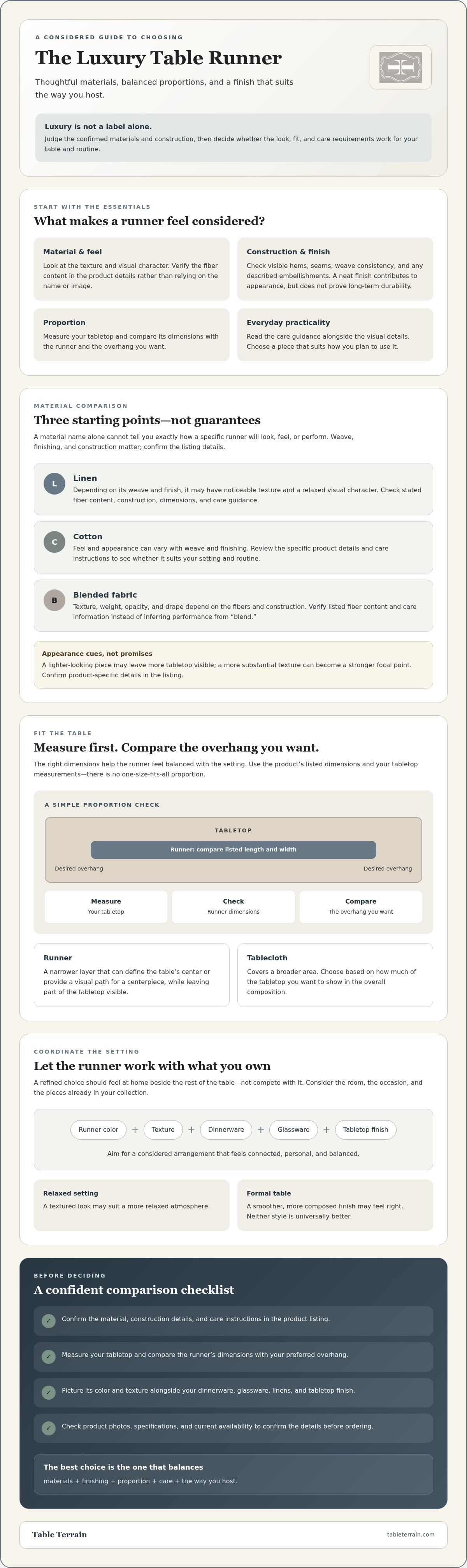
Material, construction, and intended use work together: the right combination creates a table setting that looks considered and suits the way you host. Linen, cotton, and blended fabrics can each have a different feel and visual effect. Use the comparison below as a starting point, then check the individual product listing. Don’t assume a runner is made from a particular fiber unless the details confirm it.
- Linen: Depending on its weave and finish, it may have a noticeable texture and relaxed visual character. Check the stated fiber content, construction, dimensions, and care guidance.
- Cotton: Its feel and appearance can vary with the weave and finishing. Review the product details and care instructions to see whether the specific runner suits your setting and routine.
- Blended fabric: Texture, weight, opacity, and drape depend on the fibers and construction used. Verify the listed fiber content and care information rather than inferring performance from the word “blend.”
- Silk: Celebrated for its natural luster and fluid drape, pure silk introduces a distinctly refined feel to formal dining settings; specialist suppliers like The Silk Route offer premium 100% silk fabrics often selected by interior designers and makers for bespoke table runners.
As you compare options, consider how the runner’s weight and opacity may affect the finished table. A lighter-looking piece may leave more of the tabletop visible, while a more substantial texture can make the runner a stronger focal point. These are appearance cues, not guarantees about a product’s behavior. Confirm available details in the listing.
Which runner material suits your hosting style?
Start with the atmosphere you want and how often you expect to use the runner. A textured look may suit a relaxed setting; a smoother, more composed finish may feel right for a formal table. Neither is universally better. Check the specific item’s fiber content and care guidance, and consider whether they fit the occasions you have in mind. For expert advice on table settings, consider how the runner relates to the rest of your place setting.
Which construction details signal thoughtful finishing?
Inspect the hems, seams, weave consistency, and any embellishments described in the listing. A tidy finish can contribute to a polished appearance, but it doesn’t prove how well an item will hold up over time. Photographs may show visible edges or surface texture, but they can’t confirm fiber content or care requirements. Treat unlisted details as unknown and rely on the product specifications for confirmation.
To compare options, browse table runners and tabletop pieces as individual accents to coordinate with linens, placemats, glassware, and serving items you already own.
How to Compare Runner Length, Width, and Table Proportion
A runner can look elegant on its own and still feel out of place once it’s on the table. Start with measurements, then consider how it will sit among chairs, place settings, and a centerpiece. Product dimensions vary, so use these steps to assess a specific listing rather than assuming one size will suit every table.
- Measure the tabletop. Note its usable length and width, excluding any leaves you won’t use.
- Review the runner’s listed dimensions. Compare both its length and width with your measurements.
- Decide how you want the ends to sit. A runner can stop on the tabletop or extend past its edges. If you want overhang, account for it at both ends when comparing lengths.
A common styling guideline is to allow 6 to 12 inches of overhang at each end, adding 12 to 24 inches to the table’s length. Treat this as a starting point, not a rule. Check the specific product dimensions and decide what looks balanced in your space.
Simple length diagram, viewed from above:
Optional overhang | Tabletop length | Optional overhang
Runner length spans the tabletop and, if desired, extends beyond both ends.
How do you choose a runner length for your table?
Measure the usable tabletop and compare that figure with the listed runner length. A runner that ends at the table’s edges creates a contained look and keeps the fabric on the surface. One with overhang adds a softer finish, but check whether the ends would interfere with chairs or fall awkwardly near the table’s edges. Consider how the table is usually set and seated, not just how it looks empty.
Shape matters, too. On a round or square table, a centered runner can create a strong line through the setting. On an elongated table, it can draw the eye toward a centerpiece. Keep the full arrangement in view when judging the length.
How wide should a table runner be?
Width is a matter of scale and composition. A common guideline is to choose a runner about one-third of the table’s width, leaving tabletop visible on either side. A narrower band can keep the setting feeling light and leave more room around place settings. A broader one may make a stronger visual anchor, provided it doesn’t crowd plates, glassware, or serving pieces.
Before ordering luxury table runners, cut paper to the listed dimensions and place it on the table. Set out your usual dishes and centerpiece, then check the view from each seat. This simple preview can reveal proportion issues before you choose a runner.
How to Match a Luxury Table Runner to Your Room and Occasion
A runner should feel connected to the room and the table, not like an isolated accent. Start with what you already own: dinnerware, glassware, flatware, placemats, and the tabletop finish. Luxury table runners can echo those elements or introduce a deliberate contrast. The goal is a cohesive setting, not a perfect match.
How do color and texture shape the tablescape?
A contrasting color can make the runner a focal point, while a tone close to the tabletop or dinnerware creates a quieter effect. For example, if your plates already have a strong pattern, a simpler runner can give the eye a place to rest. If the tableware is understated, texture can add interest without relying on a bold color.
Balance is key. Let one element carry the visual weight: pair a noticeably textured runner with simpler surrounding pieces, or choose a more restrained surface when your glassware or centerpiece already draws attention. For more ideas on coordinating the full scene, explore a stunning table scape guide.
What should you consider for everyday dining versus entertaining?
Think about how often you’ll use the runner, how it will be handled, and whether its listed care instructions fit your routine. For a celebratory meal, you might choose a piece that brings a more formal mood to the table. For everyday dining, consider whether its appearance works with the place settings you use most. Don’t assume a material or finish is easy to care for unless the product details confirm it.
A runner can refresh a familiar setting without requiring a complete table reset. Keep your usual dinnerware, then use the runner to shift the visual mood for a gathering. For inspiration on pairing complementary accents and homewares, lifestyle retailers like Dutchess Martha illustrate how subtle decorative touches can elevate an entire dining aesthetic. A separate elegant table settings guide can help you think through how each piece contributes to the arrangement.
Before choosing, check:
- Visual mood: Does the color and texture complement or intentionally contrast with the room and tableware?
- Table scale: Does the runner feel balanced alongside your place settings and centerpiece?
- Occasion: Does its look suit both the meals you host often and the gatherings you’re planning?
- Practical fit: Have you reviewed the specific product’s care details?
To consider how a runner might work with pieces you already own, explore table runners and dining accessories.
How to Buy a Luxury Table Runner with Confidence
A considered purchase starts with details, not assumptions. Product titles and photos can help you picture a runner on your table, but the listing is where you confirm what the item is made of, how it’s finished, and how to care for it. Use a checklist to compare options and keep your choice aligned with your table and routine.
What should you verify on a runner product page?
Before ordering, check the details that influence fit, appearance, and everyday practicality. For luxury table runners, verify:
- Table measurements: Compare your tabletop size with the runner’s listed dimensions and the look you want.
- Material: Confirm the stated fiber content rather than guessing from the product name or image.
- Construction and finish: Review any available description of hems, seams, weave, or embellishments.
- Visual compatibility: Consider how the listed color, texture, and scale will work with your table and existing pieces.
- Care details: Read the specific instructions and decide whether they suit how you’ll use the runner.
Look through the available product photographs for cues about color, texture, edge finish, and scale. Images can help you assess appearance, but they don’t confirm unlisted materials, performance features, or what accessories are included. Check specifications and current availability on the product page before placing an order, since details can vary by item.
How can you build a coordinated setting around your runner?
Begin with the runner as your anchor, then consider pieces that connect naturally with it. A shared color or texture can link the runner to placemats, glassware, flatware, or serving pieces without making every element identical. For instance, a repeated tone can create cohesion, while differences in shape or surface keep the setting from feeling overly matched.
Review what you already own before adding anything new. A runner can be an individual accent that complements existing linens and dining accessories, helping you create a personal setting one piece at a time. Table Terrain offers runners alongside tabletop pieces such as linens, placemats, glassware, flatware, and serving items, giving you options to consider together.
For a closer look at complementary pieces, browse Table Terrain’s curated tabletop décor. You can also explore Table Terrain’s tabletop collection to compare individual pieces for your setting.
Choose a Runner That Feels Like Yours
The right runner brings together thoughtful materials, a considered finish, and proportions that suit your table. As you compare luxury table runners, keep your hosting habits in view, then confirm each item’s specifications and care details before deciding. A piece that works with what you already own can refresh a setting without requiring you to start from scratch.
Table Terrain offers runners and table linens alongside placemats, glassware, flatware, and serving items, so you can consider complementary pieces as you shape a personal tabletop. Explore Table Terrain’s tabletop collection to find a runner and dining accessories that fit your vision.
Frequently Asked Questions
What makes a table runner luxurious?
A table runner feels luxurious when its material, construction, finish, and proportions work together to create a considered look. Luxury table runners may feature tactile surfaces or carefully finished edges, but a luxury label alone doesn’t confirm these details. Check the product description for verified material and construction information, then consider whether the runner’s appearance suits your table, dinnerware, and the occasions you host.
How do I choose the right size table runner?
Measure the usable length and width of your tabletop, then compare those measurements with the runner’s listed dimensions. Decide whether you want the runner to stop on the surface or extend past the ends, and consider how much tabletop you want visible on either side. A paper template in the listed dimensions can help you preview the proportions with your place settings before you buy.
Should a table runner hang over the edge?
It can, but overhang is a styling choice rather than a requirement. A runner that ends on the tabletop creates a contained look, while one that extends past the ends adds a softer finish. Check how the fabric would sit near the table edges and chairs, especially if people will be seated at the ends. Compare the runner’s listed length with your table measurements before deciding.
Which material is best for a luxury table runner?
There isn’t one best material for every table or hosting style. Linen, cotton, and blends can differ in texture, appearance, drape, and care needs. Think about whether you want a more relaxed or formal look, then check the specific product listing for fiber content and care instructions. Don’t rely on a material name or photograph alone to infer how a particular runner will feel or behave.
Can I use a table runner without a tablecloth?
Yes. A runner can sit directly on the tabletop, creating a focal line while leaving more of the surface visible. This works well if you want the tabletop finish to contribute to the overall setting. A tablecloth provides broader coverage, while a runner offers a narrower layer. Choose based on the look you prefer and how much of the surface you want covered.
How do I care for a luxury table runner?
Follow the care instructions provided for the specific runner. Materials and construction can vary, so don’t assume a cleaning method based on appearance or on how you care for another textile. Before ordering, check the product listing for care guidance and consider whether it fits your routine. If the details aren’t listed, seek clarification rather than guessing, particularly for a runner with an unfamiliar finish or embellishment.
How do I style a table runner with placemats and dinnerware?
Choose one point of connection, such as a shared color, texture, or visual mood, then let other pieces complement it without matching exactly. For instance, if the runner has a noticeable texture, simpler placemats and dinnerware can help keep the table balanced. Check that the runner leaves comfortable room for place settings and glassware, and consider your centerpiece so the finished arrangement feels cohesive, not crowded.