


Modern serving utensils can bring a table together through thoughtful shapes and finishes, even when they don’t match your everyday flatware. But a striking piece isn’t much help if it doesn’t suit the food you serve or is difficult to care for.
Choosing serving pieces means balancing function and style. You want utensils that work for your usual menus, feel at home with your table décor, and add a little personality. Whether you source dining essentials from makers like RootBorn Rituals or mix and match standalone finds, you don’t need a large set or a perfectly matched look to serve guests with ease.
In this guide, you’ll learn how to choose versatile pieces for the foods you serve most, coordinate finishes and shapes with tabletop items you already own, and check details such as material and care instructions before buying. You’ll also see what gives serving utensils a modern feel, from clean lines to tactile details, so you can choose pieces that work for everyday meals and festive gatherings.
Key Takeaways
- Modern serving utensils balance contemporary design with purposeful function. They don’t need to share one shape, material, or matching set.
- Start with the dishes you serve most, then choose utensil shapes suited to lifting, portioning, scooping, or slicing.
- Compare materials and finishes by appearance, practicality, and care needs before choosing pieces for your table.
- Coordinate serving utensils with linens, glassware, and décor through a considered finish or shape, rather than matching every item.
- Build a useful collection around frequent meals first, and add specialty pieces only when they fill a real need.
What Makes Modern Serving Utensils Right for Your Table?
Modern serving utensils pair contemporary design with practical serving function. “Modern” describes visual choices, not one required shape, material, finish, or matching set. A piece can feel current because of its clean silhouette, distinctive handle, or complementary finish. First, make sure it serves the food comfortably.
Unlike flatware set at individual places, serving utensils are shared pieces used to portion or transfer food. They usually rest beside or in the dish they’re meant to serve. A slotted spoon can lift tender vegetables while allowing excess liquid to drain; a broad serving spoon can make it easier to portion rice or salad. Choosing a tool that suits the dish helps serving go smoothly and keeps the table less cluttered.
How do modern serving utensils differ from everyday flatware?
Everyday forks, knives, and spoons are designed for individual diners. Serving pieces are shared, with shapes and proportions suited to moving food from a platter or bowl to someone’s plate. The categories connect: Cutlery offers a helpful overview of how utensils fit into dining. A coordinated look can tie serving pieces to your flatware, but exact matching isn’t necessary. A similar finish or visual weight can create harmony while allowing each piece its own character.
Which design details make serving utensils feel contemporary?
Look for details that feel intentional. A clean silhouette, balanced proportions, or restrained decoration can create a contemporary impression without making a piece feel stark. Finish affects the mood, too: a softly reflective surface may read differently from a darker or more textured one. Handle shape matters both visually and in the hand. There’s no single modern aesthetic, so consider what feels at ease with your plates, linens, glassware, and hosting style.
To choose well, picture the menu and the moment of serving. For leafy salad, a pair of utensils that can lift and turn the leaves may be more practical than a small spoon. For a shared side dish, choose a piece that lets guests take a comfortable portion without struggling to reach or scoop. Then consider where it will sit beside the dish and whether its design belongs with the rest of your table. Function gives the utensil a reason to be there; thoughtful style helps it feel at home.
Choose Modern Serving Utensils by Dish, Shape, and Use
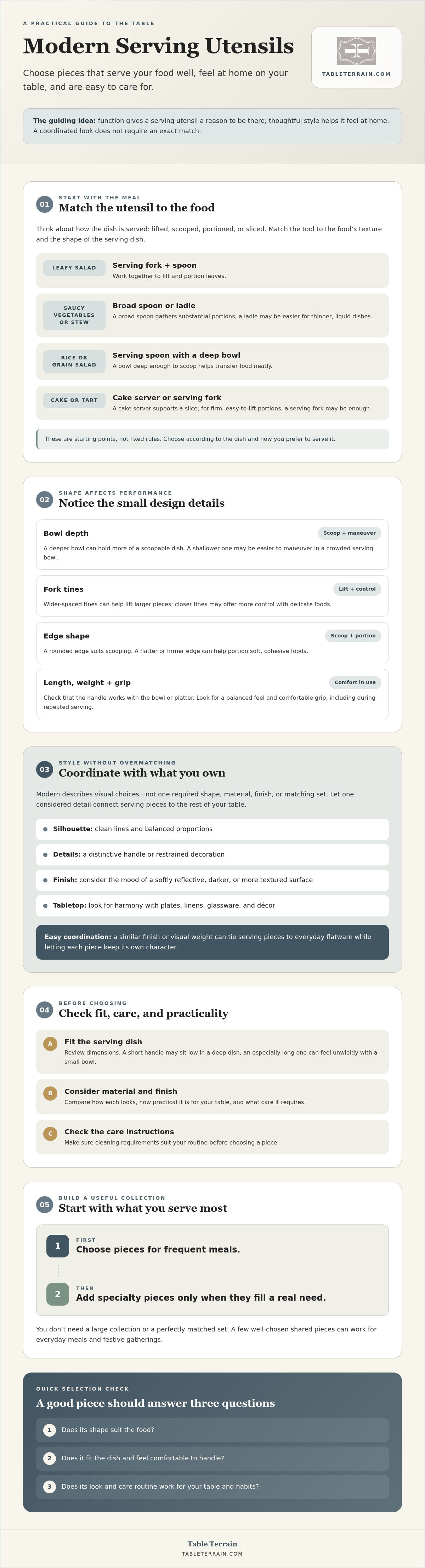
Start with your usual menu, not a checklist of every serving piece you might need. Think about how the food is served: lifted from a platter, scooped from a bowl, portioned into neat servings, or cut at the table. The right shape makes the task easier and helps guests serve themselves without awkward spills or extra effort.
As general guidance, match the tool to the food’s texture and the serving dish. A guide to serving utensils can help you explore specialized pieces and their traditional uses. These everyday pairings offer a practical starting point:
- Leafy salad: A serving fork and spoon work together to lift and portion leaves.
- Saucy vegetables or stew: A broad spoon can gather substantial portions; a ladle may be easier for thinner, liquid dishes.
- Rice or grain salad: A serving spoon with a bowl deep enough to scoop helps transfer food neatly.
- Cake or tart: A cake server can support a slice as it moves to a plate. For firm, easy-to-lift portions, a serving fork may be enough.
These are examples, not fixed rules or claims about any retailer’s inventory. Choose according to the dish and how you prefer to serve it.
Which serving utensil suits each kind of dish?
Small design details affect performance. A deeper bowl can hold more of a scoopable dish, while a shallower one may be easier to maneuver in a crowded serving bowl. Wider-spaced tines can help a fork lift larger pieces, while closer tines may offer more control with delicate foods. A rounded edge suits scooping; a flatter or firmer edge can help portion soft, cohesive foods. Consider the food’s texture as well as the tool’s name.
What size and shape are easiest to handle?
Check that the utensil’s length works with the bowl or platter. A short handle may sit low in a deep dish, while an especially long one can feel unwieldy with a small bowl. Look for a handle that feels balanced and gives you a comfortable grip. Consider how its weight and shape will feel during repeated serving, not just how it looks on the table.
Before buying, review the product dimensions and care information. Confirm that the piece fits your serving dishes and that its cleaning requirements suit your routine. A considered choice of modern serving utensils can make regular meals and shared gatherings easier. For a broader look at tabletop pieces, explore flatware and serving items.
Compare Modern Serving Utensil Materials and Finishes
Material and finish shape both the look of modern serving utensils and the care they may need. The following are general market examples, not specifications for any particular retailer’s products. The exact composition, construction, and manufacturer guidance matter more than a broad material label.
Stainless steel
Appearance and formality: Stainless steel ranges from bright and polished to softer brushed looks, so it can suit casual and more dressed settings. Everyday use and care: Practicality depends on the specific item and its instructions. Check the listing for cleaning guidance, including any limits on dishwasher use.
Silver-plated
Appearance and formality: Silver-plated pieces often bring a more traditional, polished impression that can feel special on a formal table. Everyday use and care: Plating and care needs vary. Confirm cleaning directions and any recommendations for storing the piece to help maintain its finish.
Wood or bamboo
Appearance and formality: Natural grain can add warmth and a relaxed contrast to glass or metal. Everyday use and care: Requirements depend on the item’s construction and finish. Woodcraft artisans such as FVCreations emphasize how proper penetrating oil finishes protect and preserve handcrafted wooden pieces, so always consult maker guidance rather than assuming wood can be soaked or cleaned in a dishwasher.
Surface finishes
Appearance and formality: Polished, brushed, or darker finishes can shift the mood from reflective and dressy to understated or bold. Everyday use and care: A finish is not a material. Check how it is applied and what cleaning methods the maker recommends.
How should you compare common utensil materials?
Compare specific product listings, not just category names. Look for the stated material or composition, finish, dimensions, and care instructions. Two pieces described with the same broad material term may still differ in construction and maintenance. Durability also depends on those details and how the utensil is used, so don’t treat a material or finish label as a guarantee of long-term performance.
Should serving utensils match your flatware finish?
Matching finishes can create a quieter, coordinated table, especially when your flatware already has a strong visual presence. Exact matching isn’t required, though. A deliberate contrast, such as a softer finish alongside a brighter one, can add interest if another element helps connect the look. Consider the color and texture of your linens, the character of your glassware, and the occasion. A relaxed meal may welcome a more mixed arrangement; a formal setting may feel more composed with a consistent finish.
Before choosing a fashionable finish, picture it beside the flatware and tabletop pieces you already use. If it feels like an intentional accent and suits the care routine you’re comfortable with, it can earn its place without matching every item.
Style and Care for Modern Serving Utensils with Confidence
A considered setting should feel easy to use, not just pleasing to look at. Follow a simple sequence: choose the menu, select tools for the dishes, coordinate their finishes with the table, then confirm how each piece should be cared for. This keeps practical choices in focus while helping the overall setting feel cohesive.
Set shared utensils beside the dishes they serve, with handles easy to reach and enough room for guests to pass bowls or platters comfortably. Keep frequently used pieces accessible, but leave space around place settings. Their shape and finish can echo details in your linens or glassware without competing for attention. For ideas on bringing those elements together, see how to coordinate flatware with linens.
How can serving utensils complement a modern table setting?
Look at the silhouettes and textures already on the table. If your plates or glassware have strong shapes, simpler serving pieces can provide balance. Textured linens or a runner may offer enough visual interest without ornate utensils, while a cleaner setting can make a distinctive handle or finish feel intentional. For broader ideas on arranging a welcoming table, explore elegant table settings for hosting.
Think about the occasion, too. An everyday meal may call for an uncluttered arrangement that makes serving straightforward; a celebratory gathering may leave room for a stronger accent. In either case, give each utensil a clear place and purpose. Modern serving utensils should support the flow of the meal as naturally as they contribute to its look.
How do you care for serving utensils without damaging them?
Care varies by material, construction, and finish, so follow the instructions for the specific piece. Don’t assume dishwasher use is suitable for every utensil, even if another piece that looks similar can be cleaned that way. Check the product information before the first use, and follow its guidance for washing, drying, and storage. If instructions recommend drying promptly or storing pieces separately, make that part of your routine.
Serving pieces can complete a setting alongside linens, glassware, placemats, and runners. Browse Table Terrain’s serving items as you consider what will work for your menu and table.
Build a Versatile Modern Serving Utensil Collection
A useful collection starts with the meals you actually serve. Before adding another piece, think about the dishes that appear often, how guests serve themselves, and which tasks feel awkward with the utensils you already own. This keeps choices practical and helps prevent duplicates or specialty pieces that rarely leave the drawer.
Which serving pieces should you prioritize first?
Write a short list based on your regular menus. If shared salads are a staple, prioritize tools that make lifting and portioning easy. If you often serve dishes from deep bowls, consider a shape suited to scooping. Add a cake server or another specialized piece only if a recurring dish or occasion makes it worthwhile. Versatility matters, but a tool should still do its main job well.
- Use often: Choose pieces for the foods and serving routines you rely on most.
- Use sometimes: Add a specialty utensil when a regular celebration or dish calls for it.
- Already own: Check your current drawer before buying, so you don’t collect near-duplicates.
How can you choose pieces that feel cohesive over time?
Pick a design direction, then allow measured variation. Shapes can differ while a shared visual weight or complementary finish helps the pieces feel related. Consider how each choice will sit beside your flatware, linens, and glassware, rather than judging it in isolation. For more ideas on bringing tabletop details together, see stunning table-scape styling guidance.
Before purchasing, review the details that affect fit and upkeep. Check the utensil’s dimensions against the bowls or platters you use, confirm the listed material and finish, and read the manufacturer’s care instructions. A beautiful piece is more likely to earn regular use when it fits your serving dishes and suits your cleaning routine.
The goal isn’t to own every type of serving tool. It’s to build a considered set of modern serving utensils that supports your usual menus and feels at home on your table. Table Terrain’s curated flatware and serving-items collection offers tabletop pieces to consider as you plan your setting.
Choose Pieces That Make Hosting Feel Effortless
The best modern serving utensils aren’t simply stylish accents. They’re pieces you reach for because they suit the food, feel comfortable to use, and sit naturally alongside the rest of your table. Start with the dishes you serve regularly, then consider how each utensil’s shape, finish, and care instructions fit your routine.
A versatile collection can be cohesive without being identical. Let a shared design detail connect serving pieces with your flatware, linens, or glassware, and add specialized tools only when they answer a real need. Those small, considered choices help create a table that feels welcoming and works for everyday meals and special gatherings alike.
Table Terrain offers a curated selection of flatware and serving items, alongside tabletop décor including linens, glassware, placemats, and runners. Explore Table Terrain’s flatware and serving items to find pieces to consider for your table.
Frequently Asked Questions
What utensils are considered serving utensils?
Serving utensils are shared tools used to move food from a communal dish to individual plates. Depending on the menu, they can include serving spoons and forks, ladles, salad servers, cake servers, or serving tongs. Choose by task rather than by name alone: a useful piece should suit the food’s texture and serving dish, and feel comfortable for guests to handle.
What makes serving utensils look modern?
Modern serving utensils combine purposeful use with considered design. Clean lines, balanced proportions, restrained detailing, or a distinctive handle can create a contemporary impression, but no single look defines modern style. A polished silhouette can feel current, as can an expressive, textured design. Focus on the overall impression and how the piece works with your table, rather than following one trend.
Do serving utensils need to match flatware?
No. Matching serving pieces to your flatware can create a calm, coordinated setting, but exact sets aren’t essential. A shared visual detail, such as a similar finish or shape, can connect pieces without making them identical. You can also use a deliberate contrast as an accent. Consider the surrounding plates, linens, and glassware to make the mix feel intentional.
How many serving utensils do I need?
There’s no fixed number; start with the dishes you serve regularly and the tools needed to serve them comfortably. Make a short list of recurring meals, then check what you already own before adding anything. A few versatile pieces may cover everyday needs, while a specialty tool makes sense if a particular dish or occasion comes up often. Skip duplicates that won’t earn regular use.
Are stainless steel serving utensils a good choice?
They can be a practical option if their appearance and care requirements suit your table and routine. Stainless steel is available in different finishes, so consider whether a brighter or softer look works with your existing flatware. Don’t assume all pieces have the same construction or care needs. Check the product listing for the stated composition and follow the manufacturer’s instructions.
Can I mix different serving utensil finishes?
Yes. Mixed finishes can add dimension, especially when one finish acts as a considered accent rather than an unrelated addition. Look for a point of connection, such as similar shapes or visual weight, and consider how the finishes sit beside your flatware, glassware, and linens. If you’re unsure, place the pieces together before setting the table and see whether the contrast feels balanced.
How should I care for modern serving utensils?
Follow the care instructions for each specific utensil, since cleaning needs can vary by material, construction, and finish. Don’t assume a piece is dishwasher-safe based on its appearance or on how another utensil is cleaned. Check the manufacturer’s guidance for washing, drying, and storage before use. Following those directions helps you care for the piece without risking damage to its surface or finish.