


What if the flatware that catches your eye in a product photo feels awkward at the table? Modern flatware designs can look similar online, but differences in silhouette, finish, and hand-feel shape how they work in everyday dining. A striking style should suit your routine as well as your setting.
Look beyond appearance. Material and care descriptions can be difficult to compare, and a bold finish may need more attention than you want to give it. The right choice balances visual appeal with comfort and practicality, while working alongside the linens and glassware you already own.
This guide compares modern flatware by shape, feel, finish, and care, so you can choose with confidence rather than follow a passing trend. We’ll look at streamlined and more tactile designs, explain which product details to check before buying, and share ways to coordinate flatware with your tabletop décor. Table Terrain offers flatware and serving items alongside linens, placemats, runners, goblets, and wine glasses, making it easier to consider the whole table as you choose.
Key Takeaways
- Modern flatware designs include a range of visual cues, from clean lines to distinctive silhouettes, rather than one fixed look.
- Compare material and finish details in product information, and check care instructions before choosing.
- Consider grip, balance, and perceived weight alongside appearance to find flatware that feels comfortable in everyday use.
- Start with how you’ll use the pieces, then choose a visual direction that complements your existing table linens and glassware.
- Explore flatware alongside serving items and other tabletop pieces to create a coordinated setting without matching everything exactly.
What Makes Modern Flatware Designs Feel Current?
Modern flatware is an approach to form, not one fixed look. Shape, proportion, and detail make a design feel considered in its setting. That might mean slim handles and clean lines, or a more sculptural profile with tactile details. Neither is automatically more modern. The effect depends on how the pieces work together and feel in the hand.
Look beyond novelty. A distinctive handle can catch the eye, but the proportions of the fork, knife, and spoon matter too. Consider whether the pieces feel visually balanced as a group and suit the scale and mood of your table. For a refresher on utensil terminology and the broader category, see Cutlery.
Which design details make flatware look contemporary?
Start with the handle. Straight, narrow sides and minimal ornament can create a pared-back impression. Curved lines, tapered ends, or rounded profiles can feel softer and more expressive. Surface details also shape the look: a smooth, uninterrupted form reads differently from ridges, hammered texture, or a pronounced transition between handle and utensil head.
Think about the impression you want, rather than relying on a style label. Restrained pieces can bring calm to a layered table, while sculptural shapes can add a focal point to a simpler setting. Check the full silhouette, including how the handle meets the fork or spoon, instead of judging from a close-up alone.
How does modern flatware fit an existing table?
Take in the whole setting before choosing a direction. A table with bold patterns may call for simpler lines that let the linens lead. On a more minimal table, a distinctive silhouette can bring character. Scale matters too: consider whether the flatware looks in proportion beside your dinnerware, glassware, and place setting.
Use contrast with care. Flatware doesn’t need to match every tabletop detail, but it should feel intentional beside existing colors, patterns, and textures. With patterned linens, a quieter form can help the table feel composed; with plain textiles, sculptural details can add interest. For more ideas on balancing pieces across a table, explore elegant table settings for dinner parties.
Let your table set the brief. Choose a visual direction that complements what you already own, then assess whether the proportions and details suit both casual meals and gatherings. That gives you a style with staying power, rather than a choice driven by novelty alone.
Compare Modern Flatware Designs by Material, Finish, and Silhouette
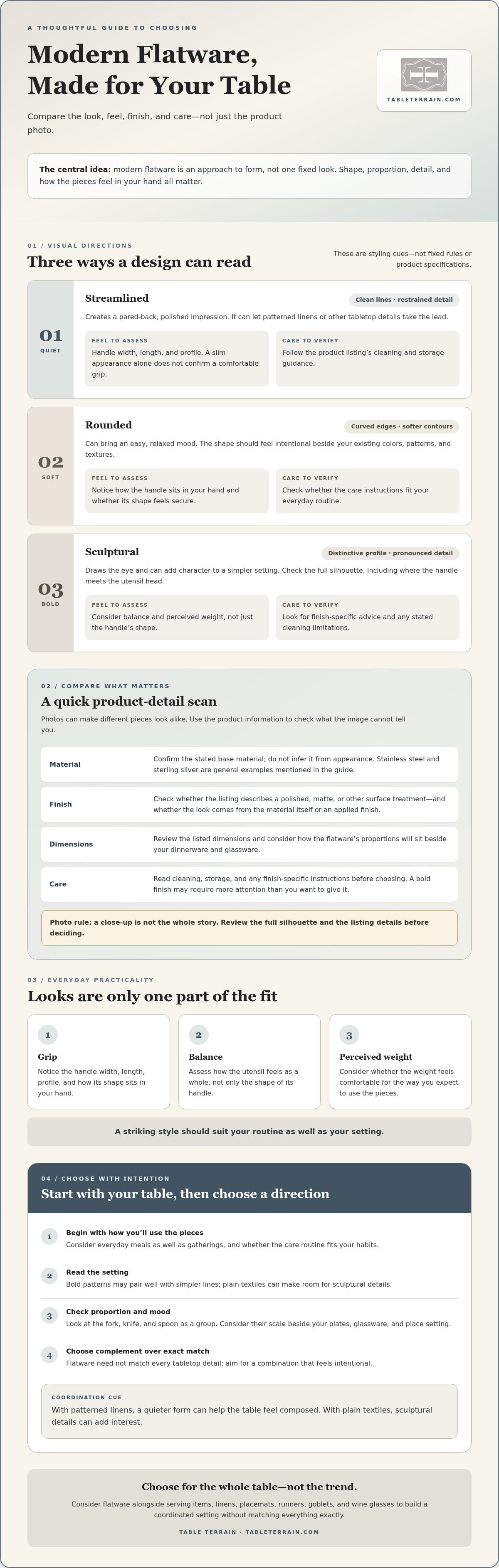
Photos can make different pieces look alike, so compare the details that influence both appearance and use. The table below offers general design cues, not specifications for any particular item. Check each product listing for its stated material, finish, dimensions, and care instructions before deciding.
| Design direction | Appearance | Material and finish | Comfort to consider | Care to check |
|---|---|---|---|---|
| Streamlined | Clean lines and restrained detailing create a quiet, polished look. | Confirm the stated material and whether the finish is polished, matte, or another surface treatment. | Look at handle width, length, and profile; a slim appearance alone doesn’t confirm a comfortable grip. | Follow the listing’s cleaning and storage guidance. |
| Rounded | Curved edges and softer contours can bring an easy, relaxed mood. | Don’t infer material from appearance. Check the description for the base material and finish. | Consider how the handle sits in your hand and whether its shape feels secure. | Verify whether the care instructions suit your everyday routine. |
| Sculptural | Distinctive profiles or pronounced details make the flatware a stronger visual accent. | Check whether the look comes from the material itself or an applied finish. | Assess the utensil’s balance and weight, not just the handle’s shape. | Look for finish-specific care advice and any stated cleaning limitations. |
How do different flatware silhouettes change the look?
Streamlined forms tend to recede, rounded shapes can soften a setting, and sculptural silhouettes draw the eye. Match their proportions to the scale of your plates and glassware. A visually substantial handle may feel out of place beside delicate pieces, while a very slender profile can get lost in a generous setting. These are styling considerations, not rules. Let the overall table mood guide your choice.
What should you check about material and finish?
Stainless steel and sterling silver are useful general examples, not claims about Table Terrain’s inventory. Product descriptions should name the material and clarify the finish; terms like “silver” can refer to appearance rather than composition. Check care directions instead of assuming a finish is dishwasher-safe or especially durable. For more context on how weight, balance, and utensil angles shape handling, read about the ergonomic aspects of flatware design.
Finish and silhouette shape the table’s mood, whether you’re aiming for understated ease or a more expressive setting. To compare available categories alongside serving pieces, explore Table Terrain flatware and serving items.
Will Modern Flatware Be Comfortable and Practical for Everyday Use?
A striking shape doesn’t automatically make flatware awkward, just as a simple design doesn’t guarantee comfort. Practicality comes down to how each piece feels in your hand, how easily you can use it, and whether its care needs fit your routine. Style sets the mood; the product’s dimensions, construction, and care instructions determine how it works day to day.
Modern flatware designs can have distinctive handles or unusual profiles and still be comfortable to use. But a product photo can’t tell you everything about grip, perceived weight, or balance. Consider these details alongside appearance, especially if you’re choosing pieces for frequent meals rather than occasional hosting.
How can you judge comfort when shopping online?
Look for listed dimensions, photographs from several angles, and any stated weight or handling information. Use a familiar utensil at home as a rough visual reference for length and handle width. If a listing doesn’t provide a detail that matters to you, don’t assume it from the image.
- Check the grip: Look at handle width, shape, and any contours that may affect how it sits in your hand.
- Assess the proportions: Compare utensil length and overall profile with the scale of your place setting.
- Read reviews as context: Customer comments may describe how a piece feels in use, but they don’t replace confirmed product specifications.
Before selecting a full place setting, compare these details across the options you’re considering. A side-by-side check can reveal differences that aren’t obvious in styled photos. When evaluating details for your Table Terrain dining setup, always consult official manufacturer specifications rather than relying on unverified claims. Review the official manufacturer details and verify any relevant claims against the listing before making your final purchase decision.
Are matte or decorative finishes harder to care for?
Care needs vary by material, finish, and manufacturer guidance, so don’t assume matte, polished, or decorative surfaces all need the same treatment. Check the product page for specific cleaning instructions before buying, then follow them after use. If the description uses terms such as “coated,” “plated,” or “brushed,” look for an explanation of what that means for care rather than relying on the finish name alone.
For everyday use, choose a design that suits your table and a care routine you’re comfortable maintaining. That balance lets visual character feel like a pleasure, not a chore.
How to Choose Modern Flatware Designs for Your Home
Make the choice in a few clear steps. Start with how often you’ll use the pieces, then decide what visual mood suits your table. Compare product details and care instructions before settling on a design. This keeps modern flatware designs grounded in your everyday needs, not just the latest look.
- Define the use. For daily meals, prioritize comfortable handling and care you can maintain. Pieces used mainly for hosting may allow more room for a striking silhouette or finish.
- Choose a visual direction. Decide whether you want the flatware to blend in, add contrast, or become a focal point.
- Compare the details. Check the listed material, dimensions, finish, and any available weight or handling information.
- Confirm care. Read the product-specific instructions and consider whether they fit your routine.
Use the same checklist for each option. A design that looks beautiful but requires care you won’t follow may be less suitable for regular use. A hosting-focused choice can still feel at home on your table if its proportions and mood work with the pieces you already own.
Which details matter most for everyday dining?
For repeated use, consider how the handles may feel in your grip, whether the dimensions suit your preferences, and how the stated care fits your schedule. Verify material and finish details in the product information rather than inferring them from a photo. Aim for a cohesive setting, not a perfectly matched one: flatware can relate to your plates and linens through shape, tone, or overall mood.
How can you coordinate flatware with linens and glassware?
Connect different tabletop elements through contrast, repetition, or a shared mood. If your linens have a bold pattern, simpler-looking flatware can give the eye a place to rest. If the textiles are understated, more expressive flatware or glassware can bring energy. Repeat a color or texture in small touches to make the mix feel intentional without matching every piece.
For ideas on choosing textiles that support the whole setting, explore the complete guide to table linens and napkin rings. To bring glassware into the mix, see the guide to colorful glassware and goblets.
Ready to compare pieces for your table? Explore flatware and serving items at Table Terrain.
Bring a Modern Flatware Look Together with Table Terrain
A finished table feels cohesive when each choice has a role. As you bring modern flatware designs into your setting, consider silhouette, material, finish, comfort, and care together. Then check how each piece relates to your linens and glassware. The aim isn’t to match everything; it’s to create a table that feels considered and works for the way you dine.
How can shoppers create a cohesive modern table?
Choose one visual anchor first. It might be patterned linens, distinctive glassware, or flatware with a noticeable shape. Let the other pieces support that focal point through a shared mood, a repeated color, or thoughtful contrast. For example, simpler-looking flatware can balance expressive textiles, while understated linens can leave more room for sculptural shapes or colorful glassware.
Mix textures and forms with intention, but don’t force a perfect match. A table can feel harmonious when pieces share a sense of scale or mood, even if their details differ. Table Terrain offers flatware and serving items alongside table linens, placemats, runners, goblets, and wine glasses, so you can consider how the elements work together. For broader styling ideas, explore inspiration for elegant table scapes.
What should you confirm before choosing a piece?
Check the live product listing for the details that affect your decision. Confirm the stated material, finish, dimensions, care instructions, and availability rather than relying on appearance or assumptions. Then compare the item with flatware and tabletop pieces you already own. A quick check of handle proportions beside your plates and glassware can help you picture the complete setting before you choose.
- For everyday dining: Make comfort and manageable care priorities.
- For hosting: Consider how the design contributes to the mood you want at the table.
- For coordination: Look for a shared color, shape, or texture, not a requirement to match every piece.
Table Terrain’s confirmed categories make it possible to browse flatware and serving items alongside complementary tabletop pieces. Review each listing’s specifics, then choose what suits your needs and the table you’re creating. Explore flatware and serving items at Table Terrain.
Choose Flatware That Feels Like Yours
The best modern flatware designs bring appearance and everyday practicality into balance. Look beyond a striking silhouette: compare material and finish details, consider comfort and care, and choose a style that suits how you dine. The right pieces don’t need to match every element on your table. A shared mood, shape, or color can create a polished setting with room for personal expression.
Table Terrain offers flatware and serving items alongside linens, placemats, runners, goblets, and wine glasses, so you can consider how your choices work together. Check product listings for specific details, then picture each piece with the tabletop items you already enjoy.
Explore Table Terrain’s flatware and serving items and find pieces that suit your table and your routine. A thoughtful choice can make everyday meals feel a little more special while keeping your setting welcoming for future gatherings.
Frequently Asked Questions
What are modern flatware designs?
Modern flatware designs are contemporary approaches to utensil shape, proportion, and detail, not one fixed style. They may feature clean lines and minimal ornament, rounded handles, or more sculptural forms. The overall effect depends on how the pieces relate to one another and to the table. Choose a look that suits your setting and feels comfortable to use, rather than assuming one finish or silhouette defines modern design.
How do I choose flatware that looks modern?
Choose a visual direction that works with your table, then compare the flatware’s silhouette, proportions, and surface details. Streamlined pieces can complement patterned linens, while a more distinctive shape can add interest to a simpler setting. Check how the handles look beside your plates and glassware, too. A balanced combination feels intentional without requiring every tabletop piece to match or follow the same trend.
Is stainless steel flatware a good choice for everyday use?
Stainless steel flatware can suit everyday dining, but the right choice depends on the specific product and your expectations for handling and care. Check the listing for the stated material, construction details, dimensions, and cleaning instructions. Don’t assume every stainless steel piece has the same properties or care requirements. If you’re comparing options, review their specifications side by side and choose one that fits your routine.
Are matte flatware finishes difficult to maintain?
Not necessarily. Care depends on the flatware’s material, how its finish is made, and the manufacturer’s instructions. A matte appearance alone doesn’t tell you whether a piece is dishwasher-safe or needs special handling. Read the product-specific care notes before buying, and follow them after use. If the listing doesn’t explain a finish-specific claim, seek clarification rather than relying on assumptions based on photos or labels.
Can modern flatware be mixed with traditional table linens?
Yes, modern flatware can pair beautifully with traditional linens. Use contrast to make the combination feel deliberate: restrained flatware can balance a detailed pattern, while distinctive handles can refresh simpler, classic textiles. You can also connect the pieces through a shared color, texture, or overall mood. Aim for a pleasing balance across the setting, rather than matching every item exactly.
What should I check before buying flatware online?
Review the product listing for confirmed material, finish, dimensions, care instructions, and what pieces are included. Study photographs from different angles, but don’t rely on images to determine weight or comfort if those details aren’t provided. Customer reviews may offer useful impressions, though they don’t replace specifications. Finally, compare the flatware’s scale and style with your existing plates, linens, and glassware before choosing.