


What if the most beautiful platter isn’t the best choice for your appetizer spread? A piece that’s too small, difficult to carry, or awkward to serve from can interrupt an otherwise welcoming gathering. The right serving platters for appetizers bring good looks and everyday practicality to the same table.
It’s natural to focus on appearance, especially when you’re setting out food for guests. But size, shape, ease of handling, and storage matter just as much. Choose a platter that suits both the food and the way you host, whether you’re serving a casual mix of bites or planning a more polished presentation.
This guide will help you choose with the occasion, appetizers, and available table space in mind. You’ll learn what to check for fit and function, then how to coordinate serving pieces with your tableware and linens. Table Terrain offers serving items alongside other tabletop décor and dining accessories, so you can consider how a platter will work with the rest of your setting.
Key Takeaways
- Let the appetizers, guest count, serving location, and hosting style guide your platter choice.
- When comparing serving platters for appetizers, check the usable surface area, not just the listed dimensions.
- Choose an open platter, divided piece, or platter with separate bowls based on how guests will serve themselves.
- Plan platter placement alongside glassware and linens to make the table inviting and easy to navigate.
- Compare product specifications for dimensions, handling, care, and storage before choosing.
Serving Platters for Appetizers: Start with the Food and Occasion
An appetizer platter presents small bites for sharing. The best choice depends on more than appearance: consider the food, how many guests will gather, where the platter will sit, and whether the occasion calls for relaxed grazing or a more composed presentation. The tradition of the hors d'oeuvre spans different dining customs, but the practical question is the same: how will guests reach and enjoy each bite?
The most useful appetizer platter suits the food, guest count, serving location, and host’s style while remaining manageable to carry and store. A dedicated platter can create a considered presentation and give you room to arrange food for sharing. A dinner plate may work for a small, casual spread, while a tray can be useful for moving several items at once. Neither is universally best. Choose based on the task and the space available.
What will you serve on the platter?
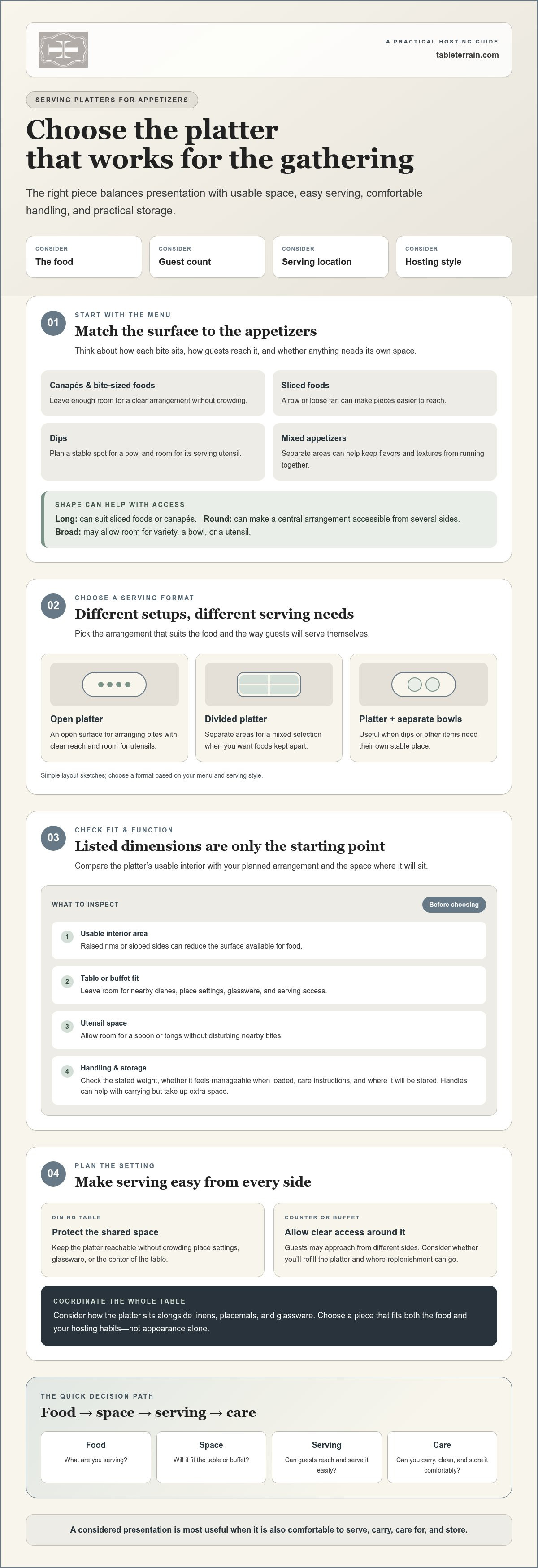
Match the surface to the shape and serving needs of the appetizers. Bite-sized canapés need enough room to sit in a clear arrangement without crowding. Sliced foods are often easier to reach when laid out in a row or loose fan. Dips need a stable spot for a bowl, while mixed appetizers may call for separate areas so flavors and textures don’t run together.
Shape affects both presentation and access. A long surface can make sliced foods easy to reach from either side; a broader one may offer more flexibility for a varied selection. Check the usable interior area, not just the platter’s outside dimensions. Leave space for serving utensils, too. If a dish needs a spoon or guests will use tongs, make sure the arrangement allows them to serve themselves without disturbing nearby bites.
Where and how will guests serve themselves?
A platter shared at a dining table should be reachable without crowding place settings, glassware, or the center of the table. On a counter or buffet, guests may approach from different sides, so an easy-to-scan arrangement and clear access around the platter can make serving smoother. Consider the guest count and whether you’ll refill the platter during the gathering. A smaller serving piece may suit a compact table; a buffet spread may call for a larger arrangement or space nearby for replenishment.
Practical details matter before and after serving. Check whether the platter feels comfortable to carry when loaded, whether its care requirements suit your routine, and where it will fit in storage. A striking piece is most useful when it works with your hosting habits as well as the food. For a coordinated setting, consider how serving items will sit alongside your linens, placemats, and glassware.
How to Choose an Appetizer Platter: Size, Shape, and Practical Details
Use a simple sequence to narrow your options: identify the food, estimate how much you’ll serve at once, check the platter’s dimensions, then assess handling and care. This keeps the choice grounded in how you’ll use it, rather than appearance alone. Before choosing an appetizer platter, check its usable surface, fit on your table, ease of carrying, care instructions, and storage needs.
Match platter dimensions and shape to the menu
A long shape can suit rows of sliced foods or canapés; a round platter can make a central arrangement accessible from several sides. A broad surface may offer room for a varied selection, or space for a small bowl and serving utensil. These are starting points, not rules. Consider how guests will reach the food and whether any items need separation.
Compare the listed dimensions with the actual table or buffet space, leaving room for nearby dishes and place settings. Outside measurements don’t tell the whole story: a raised rim or sloped sides can reduce the usable interior surface. If product details include interior dimensions, compare them with the arrangement you have in mind. A flat profile may make food easy to reach, while a rim can help contain items. Handles may make a loaded platter easier to carry but take up extra space.
For meaningful food presentation, consider how the shape and available surface support a balanced arrangement, as discussed by the thoughtful food-presentation principles. Leave enough room for guests to take a bite without shifting the rest of the spread.
Consider material, weight, care, and storage
Compare materials only when the product specifications confirm what a particular platter is made of. Then check its stated weight and handling guidance. A piece that looks appealing on the table should also feel manageable to lift and carry, especially when full. Review care instructions before buying to make sure its upkeep fits your routine.
Storage counts, too. Measure the cabinet or shelf where you plan to keep the platter, and consider whether it can be stacked safely with your other serving pieces. If space is limited, a wide or unusually shaped piece may be harder to put away. Confirmed dimensions, material, and care details make it easier to assess serving platters for appetizers against your hosting needs. Explore serving items and tabletop accents as you consider how a piece might work with your linens and glassware.
Appetizer Platters Compared: Which Format Fits Your Gathering?
Choose a format by considering what’s on the menu and how guests will serve themselves. An open surface offers flexibility, while divided sections or separate bowls can keep distinct foods apart. There’s no single best option. The right format supports your serving flow, keeps the spread comfortable to navigate, and provides the amount of separation your food needs.
| Format | Best-use scenario | Practical trade-off |
|---|---|---|
| Single open platter | Arranging one type of bite or a flexible mix of appetizers | Adaptable layout, but foods and flavors may touch |
| Divided serving piece | Keeping different bites or accompaniments in separate sections | Built-in separation, but each section limits arrangement space |
| Platter with separate bowls | Serving dips or small accompaniments beside other bites | Separates liquid or soft foods, but takes up more table space and adds pieces to handle |
One open surface or separate sections?
An open platter makes it easy to adjust the arrangement when the menu changes. Group similar bites, leave space for serving utensils, and create a layout guests can understand at a glance. It can work especially well for appetizers that don’t need strict separation.
Choose divisions when keeping foods apart matters to the presentation or serving experience. Consider cleanup and replenishment, too. A single surface may be quick to reset, while separate areas or pieces can make it easier to refill one item without rearranging the rest. Check that each section leaves enough room for the food and any utensil guests will need.
Platter, tray, or platter with bowls?
These formats serve different purposes. A platter presents food for guests to share. A tray may be more useful for carrying or moving several items, depending on its design. A platter paired with bowls can keep dips or small accompaniments contained and accessible beside the main bites. Think about whether guests will serve themselves at a table, counter, or buffet, and how often you may need to replenish items.
Before buying, confirm the dimensions and exactly what’s included. A product image may show bowls or accessories that aren’t part of the purchase, so check the written specifications. Make sure the combined arrangement fits your serving surface and leaves guests enough room to reach each item. Compare serving platters for appetizers by menu, space, and serving flow, then choose the format that makes hosting feel natural.
Style Appetizer Platters for Easy Serving and a Cohesive Table
A well-styled appetizer spread should look inviting and feel easy to use. Place the platter where guests can reach it without leaning across place settings or blocking shared dishes. Leave room for glasses, serving utensils, and hands moving around the table. On a buffet, keep the serving area clear and place frequently reached-for items where guests can approach them comfortably.
Arrange appetizers so guests can serve themselves
Group similar bites so guests can see what’s available. Leave a small gap for tongs or spoons where needed, and keep dips or other accompaniments accessible without making the main platter difficult to reach. If the table is shared, check that the platter doesn’t crowd place settings or interrupt access to other dishes.
Consider replenishing in manageable portions rather than filling every serving piece at once. This can make it easier to refresh the display and keep the table from feeling crowded. The right amount depends on your menu and gathering, so plan around the space you have and how guests will move through it.
Coordinate the platter with linens and tableware
Build a cohesive look with a focal point, such as the appetizer platter, then let nearby pieces support it. Color and texture can create contrast or a quieter, coordinated effect. A patterned linen may pair well with simpler surrounding pieces, while a detailed platter can stand out against a more restrained table. You don’t need a perfectly matched set; a considered balance is often more welcoming.
Look at the platter alongside the glassware, placemats, runners, and other serving pieces you already own. For more ideas, explore elegant table settings, table linens and napkin rings, and layered tablescape ideas. These topics can help you consider how a serving piece fits into the table as a whole.
For a personalized setting, choose serving platters for appetizers that complement your tableware while making food easy to reach. Table Terrain’s serving pieces and tabletop accents can be considered alongside your existing pieces.
Choose Serving Platters for Appetizers with Confidence
A clear checklist can turn a broad search into a practical choice. Start with the menu and how guests will serve themselves, then compare each option’s confirmed product details with your table, hosting habits, and available storage. A platter should support the occasion and work with the serving pieces you already use.
A final checklist before you buy
- Menu: Will the format suit the appetizers, accompaniments, and serving utensils?
- Dimensions: Do the outside measurements fit your table or buffet, and is the usable surface large enough for the arrangement?
- Format: Would an open surface, divided sections, or separate bowls work best for the foods you’re serving?
- Handling: Review the stated weight and any handling details to decide whether it’ll be comfortable to carry and serve from.
- Care and storage: Check care instructions and confirm the platter fits your cabinet or shelf.
- Included components: Verify whether bowls, utensils, or other pictured pieces are included or sold separately.
Find a platter that fits your hosting style
If you host different occasions or change the menu often, a versatile format may earn its place more frequently. If you tend to serve particular appetizers, choose according to their needs instead. Either way, compare confirmed specifications rather than assuming a product image tells the whole story. Dimensions, material, care instructions, weight, and included components help you judge how a piece will work in your home.
You don’t need to replace a complete table setting to create a cohesive look. Consider how a new serving piece might work alongside your existing linens, glassware, and serving items. Table Terrain offers a curated selection of tabletop décor and dining accessories, including serving items, to help you explore options for a personalized table.
When you’re ready to compare pieces, explore Table Terrain’s curated tabletop pieces and review the product details against your hosting needs.
Choose a Platter That Makes Hosting Feel Easy
The best serving platters for appetizers fit the menu and the way you welcome guests. Let the food and occasion guide the format, then check the usable surface, handling, care, and storage details before choosing. Thoughtful placement and a few complementary table pieces can make the spread inviting and comfortable to serve.
Keep your existing tableware in mind, too. A platter doesn’t need to match everything; it should work with the linens, glassware, and serving pieces you enjoy using. Once those practical details are settled, you can focus on arranging the food and enjoying the gathering.
Table Terrain offers curated tabletop décor and dining accessories, including serving items, linens, placemats, and runners. Explore Table Terrain’s curated tabletop pieces to find complementary items for a polished, personal table.
Frequently Asked Questions
What size serving platter should I use for appetizers?
Choose a size based on the food, guest count, and space available on your table or buffet. For serving platters for appetizers, check the product’s stated dimensions and consider how much surface remains usable after accounting for edges or divided sections. A varied menu may be easier to arrange and replenish across several smaller pieces than on one oversized platter. Leave room for serving utensils and nearby dishes, too.
What shape platter is best for serving appetizers?
No single shape suits every menu. A long platter can work well for foods arranged in rows, while a round or broad surface may suit a more open grouping. Consider the size of each appetizer, how guests will reach it, and where you’ll serve it. Before choosing, compare the platter’s actual dimensions with the available table or buffet space, including room for glassware and other shared dishes.
What material is best for an appetizer serving platter?
Choose based on the confirmed material and product details, not assumptions about performance. Review the stated weight, care instructions, and any handling guidance, then consider how you’ll use and store the platter. Some hosts may prioritize a piece that’s easy to carry; others may focus on presentation or the tactile appeal of organic textures. Don’t assume a platter is dishwasher-safe, food-safe, or suitable for a particular use unless its specifications explicitly confirm it.
Can I use a dinner plate as an appetizer platter?
Yes, a dinner plate can work for a small, casual serving if its surface and edges suit the food. For a larger spread, a dedicated platter may offer a more useful shape or serving area. Consider whether guests can reach the appetizers comfortably and whether there’s space for serving utensils. Also think about carrying and cleaning the piece, especially if it’ll be moved between the kitchen and serving area.
Do I need separate platters for dips and appetizers?
No, separate platters aren’t always necessary. One open platter can work if the foods don’t need separation and there’s enough room to serve them comfortably. Separate bowls or divided pieces can help keep dips and distinct items apart. Before buying, confirm which components are included and which may be sold separately. Factor in cleanup, replenishment, and how much table space the full arrangement will use.
How do I style an appetizer platter for a dinner party?
Place the platter where guests can reach it without crowding place settings or blocking other shared dishes. Arrange the food in clear groups and leave room for serving utensils. Keep dips and accompaniments close by, but allow space for guests to move comfortably around the table. For a cohesive look, consider how the platter’s color and texture work with existing linens and glassware, without sacrificing ease of serving.
Table Terrain editorial perspective: Our guides reflect the collected-not-coordinated approach developed by founder and creative director Brooke Streep through nearly three decades of styling homes, events, and tables. Meet Brooke or explore The Table Terrain Method.